Investigations, regulatory-gap alerts, and market analysis for NYC condo & co-op owners. Every claim links to a primary source. No speculation. No spin. Just the record.

Latest Coverage
168 stories · filed continuously
 Midtown Manhattan · CommunistSquared (cc0) How To
 How to get dues status certification before your NYC condo closing. Iowa requires it by statute. New York doesn't.
Iowa Senate File 2448, effective July 1, 2026, requires condo associations to certify dues status to buyers within 10 business days of a written request under Iowa Code §499C.2. New York Real Property Law Article 9-B has no equivalent deadline, no standard form, and no enforcement mechanism. Here is how to build the same protection through contract before your NYC condo closing.
 Michigan State Capitol · Brian Charles Watson / CC BY-SA 3.0 National Comparison
 Michigan set a minimum reserve floor for condo associations by administrative rule. New York's equivalent bills never moved.
Michigan Administrative Code R. 559.511 has required condo associations to maintain a reserve fund equal to at least 10 percent of their annual budget since the 1970s, set under the authority of Michigan Compiled Laws section 559.205. New York has no reserve fund requirement. S7600 and A8945 received no floor vote before Albany adjourned June 18, 2026.
Midtown Manhattan · CommunistSquared (cc0) Regulatory Gap New York has had a condo and co-op civil court bill since 2009. No committee has heard it.
New York Senate Bill S.9797, introduced April 2026, would create a specialized subpart of NYC Civil Court's housing part for condo and co-op disputes. Companion bills S.2700 and S.9270 carry the same concept. None received a committee hearing before Albany adjourned June 18, 2026. The same bill has been reintroduced since 2009.
Midtown Manhattan · CommunistSquared (cc0) Mandate Alert LL126 Sub-Cycle 1C opened January 1. Three boroughs. No licensed filer.
NYC Local Law 126 of 2021 opened its Sub-Cycle 1C filing window for the Bronx, Queens, and all Staten Island community districts on January 1, 2026. Condition assessment reports are due December 31, 2027. Sub-Cycle 1A produced more than 400 penalty notices. The managing agent coordinating the work holds no state license.
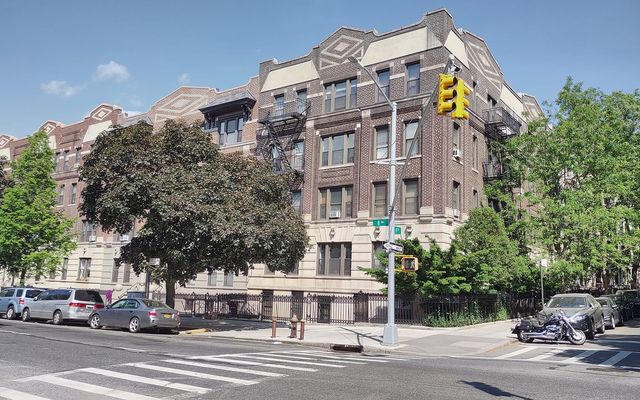 Park Slope Historic District, Brooklyn · Jim.henderson / CC BY-SA 4.0 Deadline Alert
 Local Law 157's gas detector deadline arrives January 1. New York licenses no one overseeing it.
NYC Local Law 157 of 2016 requires natural gas detectors in every covered residential unit by January 1, 2027. The original compliance date ran May 1, 2025; Local Law 102 of 2025 extended it. New York licenses no one coordinating the installation work at your condo or co-op.
 Wisconsin State Capitol · Wikideas1 (cc0) National Comparison
 Wisconsin required condo associations to offer owners a dispute conference before suing. New York has no equivalent.
Wisconsin 2019 Act 168, enacted March 3, 2020, required condo associations to offer unit owners a mandatory direct-negotiation conference before filing any circuit court claim. A 2022 companion act added a six-year financial records floor and a majority-vote audit trigger. New York Real Property Law Article 9-B contains no equivalent of either.
 Indiana State Capitol · Daniel Schwen / CC BY-SA 4.0 National Comparison
 Indiana required a written fine schedule before any board can penalize an owner. New York's Condominium Act has no equivalent.
Indiana P.L. 155-2026 (HEA 1115), effective July 1, 2026, added written fine schedules, four-day meeting notice, free records access, a resale fee cap, a two-thirds amendment ceiling, and primary-resident-only eligibility for rental votes to its Homeowners Association Act. New York's Condominium Act and Business Corporation Law contain none of the six.
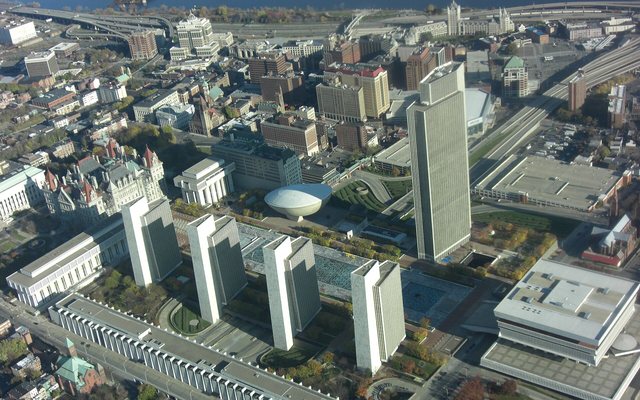 Empire State Plaza, Albany · Own work of Jer21999 (from en.wikipedia) (public domain) Regulatory Gap
 A managing agent stayed in a condo lawsuit for repairs. New York has no license.
On March 10, 2026, the Appellate Division, First Department, kept alive derivative breach of contract claims against Sherwood Residential Mgt. LLC, the managing agent at 500 West 21st Street Condominium in Chelsea. New York has issued no managing agent license and has no administrative complaint forum for this class of grievance.
 Arizona State Capitol / CC BY 2.5 National Comparison
 Arizona required condo and HOA boards to act reasonably and banned votes in executive session. New York has neither.
Arizona HB 4011, effective September 12, 2026, amended the state Condominium Act to require boards to act reasonably and without favoritism. A companion bill, SB 1290, banned board votes in executive session. New York Real Property Law Article 9-B and the Business Corporation Law contain no reasonableness standard and no open-vote requirement.
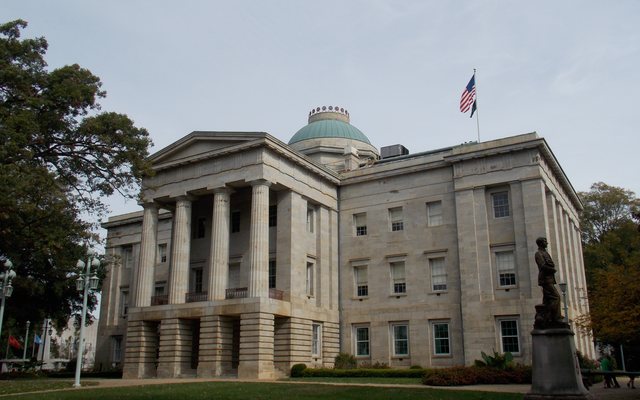 North Carolina State Capitol, Raleigh · Farragutful / CC BY-SA 4.0 National Comparison
 North Carolina banned fine-based pay for managing agents and capped their contracts at two years. New York has no equivalent.
North Carolina Session Law 2026-51 (H.B. 372), signed July 7, 2026, bars managing agents of condominiums and HOAs from being compensated based on the fines they collect and limits management contracts to two years. New York's Condominium Act and Business Corporation Law contain neither restriction. No equivalent bill has been introduced in Albany.
 Georgia State Capitol, Atlanta · DXR / CC BY-SA 4.0 National Comparison
 Georgia required every homeowners association and condo board to register with the state and gave owners twelve rights. New York's bill never advanced.
Georgia Senate Bill 406, signed May 12, 2026, requires every HOA and condo association to register annually with the Secretary of State beginning January 1, 2027. An unregistered association forfeits its ability to collect fines, record liens, and foreclose. New York has no equivalent registration requirement. Assembly Bill A5227, the condominium owner bill of rights, received no floor vote before Albany adjourned.
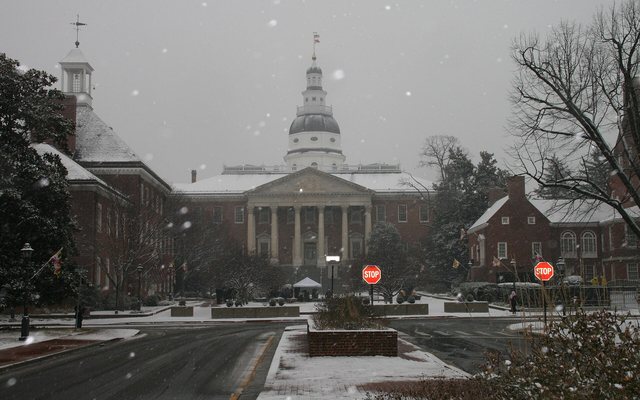 Maryland State Capitol · Marylandstater of English Wikipedia (public domain) National Comparison
 Maryland authorized condo boards to install EV charging in common parking areas. New York has no equivalent.
Maryland Chapter 753 (HB 405), effective October 1, 2026, voids governing document provisions that block condo boards from installing EV charging in common parking. New York RPL § 339-LL protects unit owners' right to install in their own dedicated space. It does not void restrictions on board-driven common-area charging. Co-op shareholders have no statutory right under any New York law.
Midtown Manhattan · CommunistSquared (cc0) National Comparison New Jersey required structural integrity inspections for steel and concrete condo buildings. New York has no equivalent.
New Jersey P.L. 2023, c. 93 set a January 8, 2026 deadline for structural integrity inspections at steel, concrete, masonry, and heavy-timber condo buildings under N.J.S.A. 52:27D-132.4. New York has no equivalent. Your board's legal obligation to inspect stops at the facade and the parking structure.
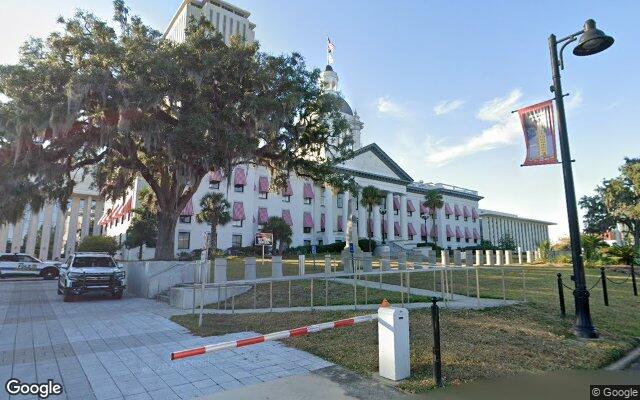 Florida State Capitol, Tallahassee National Comparison
 Florida can revoke a condo manager's license and ban the firm. New York has none to revoke.
Florida's DBPR revoked a South Florida community association manager's license in September 2026, ordered $120,000 in fines and costs, and triggered a 10-year industry bar under Florida HB 913 (2025). New York licenses no one managing your building and has no notification mechanism for affected associations.
Florida State Capitol, Tallahassee National Comparison Florida built a court path to remove condo board directors. New York's Condominium Act has no equivalent.
Florida HB 797 (2026), signed June 25 and effective July 1, created a statutory path for any unit owner to ask a court to remove a condo board director who commits fraud, gross abuse of authority, or intentional harm. It also created a formal derivative lawsuit framework with demand, investigation, and settlement procedures. New York's Condominium Act has no judicial removal provision and no equivalent derivative lawsuit framework.
 Lower Manhattan · King of Hearts / CC BY-SA 3.0 Regulatory Gap
 Co-op anti-LL97 group took $750K from REBNY. No disclosure required.
Co-ops and Condos United of NY organized the September 2026 rally against Local Law 97 fines. Before rebranding in late 2025, the group ran on more than $750,000 from a Real Estate Board of New York lobbying fund. Geoffrey Mazel, CCU's co-founder, confirmed the REBNY connection. New York has no statute requiring co-op owners to know about it.
 Manhattan Municipal Building (NYC Dept. of Finance) · Kidfly182 / CC BY 4.0 Tax Alert
 Pied-à-terre rollout annulled. The co-op share problem stays.
On September 29, 2026, Justice Wayne M. Ozzi of Richmond County Supreme Court annulled the Department of Finance's pied-à-terre surcharge rollout and ordered the city to verify property status before notifying any owner. The court found the city reversed the burden of proof. The statute and its co-op collection mechanism were not changed.
Lower Manhattan · King of Hearts / CC BY-SA 3.0 How To Local Law 97's first penalty season is here. Here is what over-limit condo and co-op boards do now.
On September 15, 2026, the Department of Buildings reported that 95 percent of covered buildings filed compliant Local Law 97 reports. The remaining 5 percent face civil penalties of $268 per metric ton over their cap, processed through OATH. The managing agent who controls the response needs no state license.
Midtown Manhattan · CommunistSquared (cc0) Deadline Alert NYC's Building Code gives traction elevators until January 1 to add a secondary brake. The managing agent overseeing the work needs no license.
NYC Building Code 2022 Appendix K3 requires all traction elevators with single-plunger brakes to add a secondary brake system by January 1, 2027. The modification runs about $30,000 per car and requires a DOB permit and acceptance test. A missed deadline means a red-tag violation. New York licenses no one managing the work.
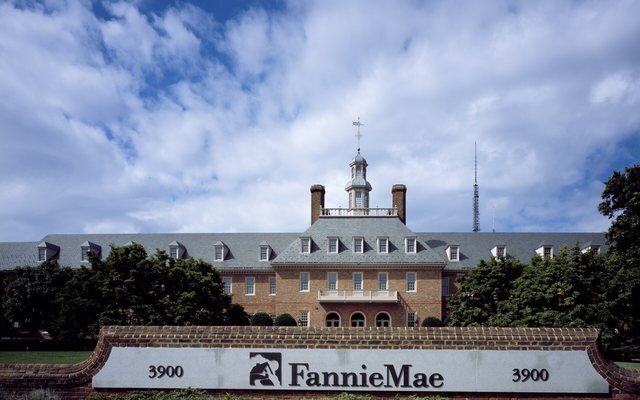 Fannie Mae headquarters, Washington, D.C. · Carol M. Highsmith / LOC (public domain) Regulatory Gap
 Condo industry asked Congress to pause the Fannie Mae reserve floor. FHFA said no.
At its September 23 congressional summit, the Community Associations Institute asked lawmakers to press FHFA to suspend Fannie Mae and Freddie Mac's new condo lending standards for one year. FHFA had already declined. New York's reserve study bills, A8945 and S7600, received no floor vote before Albany adjourned. The Fannie Mae floor is the only one that exists.
Manhattan Municipal Building (NYC Dept. of Finance) · Kidfly182 / CC BY 4.0 Regulatory Gap Fannie Mae set a co-op reserve floor. NYC boards use flip taxes instead.
Fannie Mae Lender Letter LL-2026-03 raised the minimum budgeted reserve allocation for co-op projects to 15 percent of annual assessment income, effective January 4, 2027. NYC prewar co-op boards have funded capital work through flip taxes and special assessments. Fannie Mae does not count either. New York has no reserve study mandate.
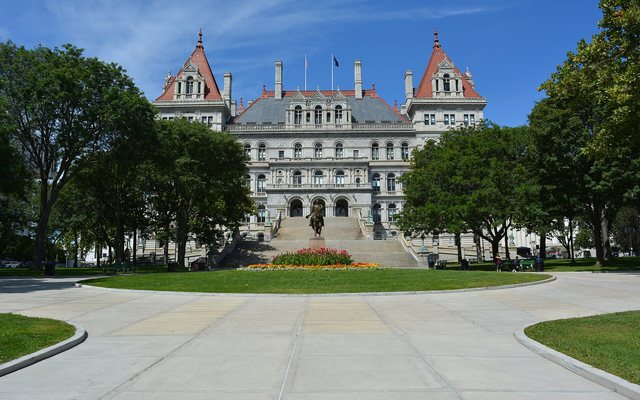 New York State Capitol, Albany · Shaunfrombrooklyn / CC BY-SA 4.0 Regulatory Gap
 New York's occupied conversion rules are final. Here is where they stop.
On September 16, 2026, the NY AG's Real Estate Finance Bureau adopted final rules for occupied rental-to-condo and co-op conversions under 13 NYCRR Parts 18 and 23, 87 months after HSTPA 2019 required them. The rules close a tenant-protection gap in noneviction plans. They end at the closing table. Post-closing governance remains outside the REFB's statutory authority.
Midtown Manhattan · CommunistSquared (cc0) Legislation New York's co-op protection bill gave New York City a way out.
NY Senate Bill S8912 would have added the Cooperative Shareholder Protection Act to New York law: competitive bidding requirements, plain-language budgets, and shareholder information rights. Section 139 let New York City's City Council opt every NYC co-op out of those protections by local ordinance. Albany adjourned June 2026 without action.
Midtown Manhattan · CommunistSquared (cc0) Regulatory Gap Azure's board fixed its ground rent in three years. New York has no cap.
Shareholders at Azure, 333 East 91st Street in Yorkville, sold at a loss while the board spent three years persuading the NYC Educational Construction Fund to remove a fair-market reset from the building's ground lease. The result is fixed 3.7-percent annual increases through 2082. New York has no statutory cap on ground lease resets and no buyer-disclosure requirement for reset risk.
Midtown Manhattan · CommunistSquared (cc0) Regulatory Gap New York will fund 300 affordable co-ops. Same governance gap.
New York City's 'Block by Block' housing plan will lend $75 million to create 300 new affordable co-op units by 2028. The city's own conversion program completed 13 buildings in 13 years. The new co-ops inherit no reserve requirement, no managing agent license, and no enforcement forum.
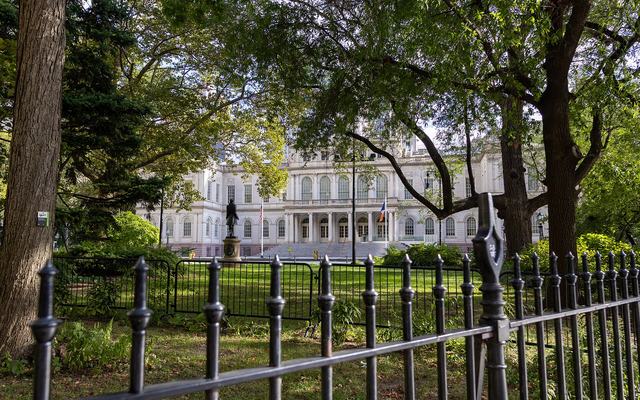 New York City Hall, Manhattan · Nielsoncaetanosalmeron / CC BY 4.0 Regulatory Gap
 An AI-photo label ships. A managing-agent license waits. The arithmetic is fifty years old.
Mamdani's AI-listing disclosure rule needs no vote, no budget line, and has no organized opponent. Managing-agent licensure, a condo ombudsman, and a foreclosure floor each fail two of those tests. Since the 1970s New York has given condo and co-op owners notices, clocks, labels, and prosecutions. Never a license, a forum, or a floor.
Manhattan Municipal Building (NYC Dept. of Finance) · Kidfly182 / CC BY 4.0 Tax Alert HPD extended the 421-a(16) construction deadline to 2031. The income-restricted condo ownership track has no extension.
On September 19, 2026, HPD adopted a rule extending the 421-a(16) construction deadline to June 15, 2031 for five of the seven affordability options. Option G, the only track designed for income-restricted condo and co-op ownership, does not qualify. New York has no disclosure requirement for this gap.
Midtown Manhattan · CommunistSquared (cc0) Mandate Alert DCWP posted the Local Law 61 wage floor. NYC co-op and condo boards have 103 days to budget it.
On September 1, 2026, the NYC DCWP posted its Minimum Wage Schedule under Local Law 61 of 2026. The rate runs $18.87 to $33.70 per hour, with benefits of $8.47 per hour from 2029. For a co-op or condo with 24/7 coverage, the January 1, 2027 floor adds $60,000 to $70,000 per year. The managing agent negotiating the contract needs no state license.
Empire State Plaza, Albany · Own work of Jer21999 (from en.wikipedia) (public domain) Legislation The bill that would license NYC managing agents has no Senate sponsor going into 2027.
NY Senate Bill S.71 would have required managing agents of NYC co-ops and condos to register with the Secretary of State. The bill did not receive a committee hearing in ten consecutive sessions. Albany adjourned June 18, 2026, and Senator Kavanagh, its longtime sponsor, announced he would not seek re-election. The 2027 session has no identified sponsor.
Midtown Manhattan · CommunistSquared (cc0) Regulatory Gap An NYC permit firm filed 57 jobs without review. No license was required.
On September 16, 2026, Attorney General James shut down Basic Group, whose hired architect certified 57 DOB permit applications he never reviewed. New York has no license requirement for permit expediting firms. The same accountability gap runs through every LL97, LL11, and LL126 project at your condo or co-op.
Lower Manhattan · King of Hearts / CC BY-SA 3.0 Mandate Alert Local Law 97 posted 95% compliance in year one. The 2030 threshold will catch 63% of those same buildings.
On September 15, 2026, the Department of Buildings reported that 95% of covered buildings comply with Local Law 97's 2024-2029 caps. Under the 2030-2034 period, 63% of those buildings currently exceed their new threshold. Estimated citywide retrofit cost: $20 billion. The managing agent controlling that spending needs no state license.
Midtown Manhattan · CommunistSquared (cc0) Regulatory Gap New York set a 90-day notice before condo foreclosures. It set no dollar floor.
Governor Hochul signed S7413 on October 16, 2025, requiring condo boards and HOAs to give 90 days' written notice before foreclosing a common charge lien. The amendment adds a procedural step and moves lien foreclosures under Article 13 RPAPL. New York still has no minimum dollar floor, no payment plan requirement, and no post-sale redemption right.
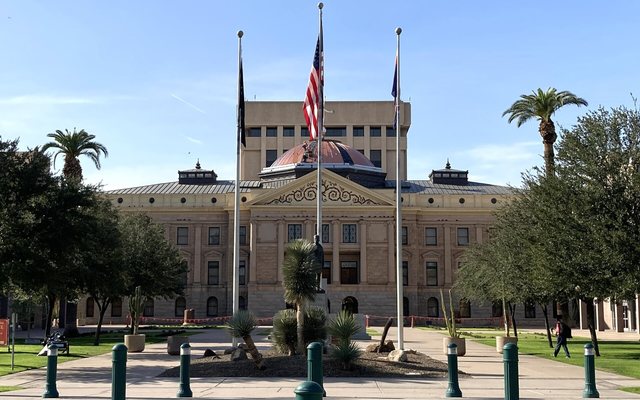 Arizona State Capitol, Phoenix · David Jiang / CC BY-SA 4.0 National Comparison
 An Arizona HOA took a house over $977 in dues. New York's rules are thinner.
A Mesa, Arizona association foreclosed on a $449,328 house over $977 in unpaid assessments and bought it at the sheriff's sale for $8,172. Every step was legal. Arizona then raised its foreclosure floor to $10,000 or 18 months and required a payment-plan offer. New York has no floor, no plan rule, no post-sale redemption, and no ombudsman.
Midtown Manhattan · CommunistSquared (cc0) Regulatory Gap Carnegie House won the arbitration fight. New York has no ground lease cap.
The Appellate Division vacated an arbitration award that would have raised Carnegie House's ground rent from $4.3 million to $24 million after the neutral umpire failed to disclose a job offer from the landowner's co-counsel. The remedy is a new arbitration. S2433A, the ground lease rent cap bill, did not advance before Albany adjourned in June 2026.
 Utah State Capitol · Mangoman88 / CC BY-SA 3.0 National Comparison
 Utah licensed property managers and exempted the ones who run condos.
Utah's property manager license, effective July 1, 2026, requires a state exam and Division of Real Estate oversight. Community association managers who run condominiums, co-ops, and HOAs are exempt by statute. The Community Associations Institute lobbied for the carve-out. New York's S.71 has not received a committee hearing in ten consecutive sessions.
Maryland State Capitol · Marylandstater of English Wikipedia (public domain) National Comparison Maryland required condo unit owners to carry insurance. New York hasn't.
Maryland Senate Bill 747, effective October 1, 2027, amends the Maryland Condominium Act at section 11-114 to require every condo unit owner to maintain an HO-6 policy with at least $25,000 in loss assessment coverage and annual proof of insurance. New York Real Property Law section 339-BB requires no unit-owner insurance and sets no deductible cap.
Park Slope Historic District, Brooklyn · Jim.henderson / CC BY-SA 4.0 Deadline Alert LL152 Cycle 2 closes December 31. Five community districts. No licensed filer.
Buildings in NYC community districts 4, 6, 8, 9, and 16 must file a Local Law 152 gas piping inspection by December 31, 2026. Cycle 2 expanded to commercial spaces, moved to mandatory DOB NOW e-filing, and raised penalties to $5,000 per year. The managing agent coordinating the filing needs no state license.
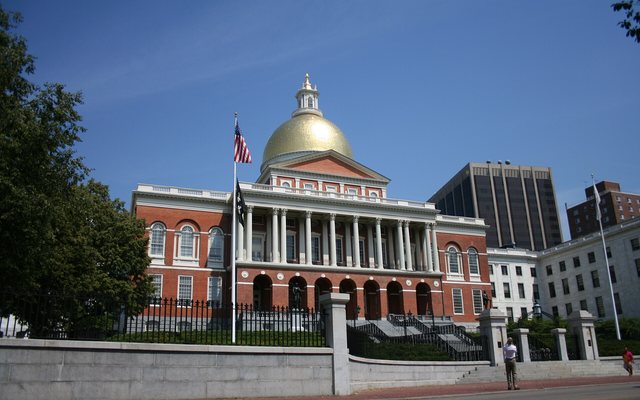 Massachusetts State Capitol · Stefan Schulze (Audience) / CC BY-SA 3.0 National Comparison
 Massachusetts put a reserve fund in its condo law. New York still hasn't.
Massachusetts General Laws Chapter 183A requires every condo board to maintain a separate replacement reserve fund and requires managing agents to report on it quarterly with bank statements. New York's Condominium Act requires neither. Bills S7600 and A8945 did not advance before Albany adjourned June 18, 2026.
 Washington State Capitol, Olympia · Farragutful / CC BY-SA 4.0 National Comparison
 Washington required condo boards to send owners a reserve summary. New York's bills did not advance.
Washington's WUCIOA amendments, effective July 1, 2026, require condo boards to include a one-page reserve summary in the annual budget package and to provide the full reserve study to any owner on written request within ten business days, at no cost. New York's companion bills were referred to committee and received no floor vote before Albany adjourned June 18, 2026.
Lower Manhattan · King of Hearts / CC BY-SA 3.0 Legislation The city will fund LL97 retrofits. New York still licenses no one managing them.
Int. 1015, which had a public hearing before the Council Committee on Housing and Buildings today, would authorize an expanded J-51 tax abatement tied to Local Law 97 retrofit costs for up to 300,000 co-op and condo units. The state budget extended and expanded J-51 through 2036. The managing agent who controls the spending needs no license.
Midtown Manhattan · CommunistSquared (cc0) Legislation The bill NYC co-op boards support consolidates energy reports, not disclosures.
Int. 559-2026 would let NYC buildings file one combined Local Law 87 and Local Law 97 energy compliance report instead of two. The 2026 CNYC scorecard supports it and marks as opposed three bills that would require boards to disclose rejection reasons, restrict screening criteria, and extend protected-class coverage. The pattern is consistent.
Midtown Manhattan · CommunistSquared (cc0) Regulatory Gap NYC co-op fair housing: a new protected class, the same enforcement gap.
Int. 0242-2026 would add family and relationship structure to the NYC Human Rights Law. For co-op buyers, it joins more than thirty grounds that boards face no obligation to distinguish between when they say no. Without a rejection-reason requirement, every protected class is legally real and procedurally unreachable.
Fannie Mae headquarters, Washington, D.C. · Carol M. Highsmith / LOC (public domain) Regulatory Gap The city put $100 million into a housing insurance fix. Market-rate condos and co-ops are not in it.
The Mamdani administration committed $100 million to a city-backed housing insurance program for affordable and rent-stabilized housing. Market-rate condos and co-ops are outside the eligibility criteria. New York Real Property Law §339-BB has left the state insurance floor conditional on declaration language since 1964.
Midtown Manhattan · CommunistSquared (cc0) Regulatory Gap New York law required the deposits in escrow. 427 Marcy Avenue's developer spent $6.715 million of them.
On September 3, 2026, Attorney General James secured $6.715 million for seventeen Williamsburg condo buyers after 425 Marcy LLC collected deposits without an accepted offering plan and misappropriated the escrow funds. New York has no mandatory pre-signing verification step that would have put buyers on notice before they handed over money.
Midtown Manhattan · CommunistSquared (cc0) Regulatory Gap Your board can shift a $250,000 deductible to your unit. New York sets no limit.
NYC condo and co-op boards are adopting deductible resolutions that shift the master insurance policy's deductible to individual unit owners. Deductibles reach $250,000 for water damage. New York has no statutory ceiling, requires no disclosure to buyers, and licenses no one who drafts the resolution.
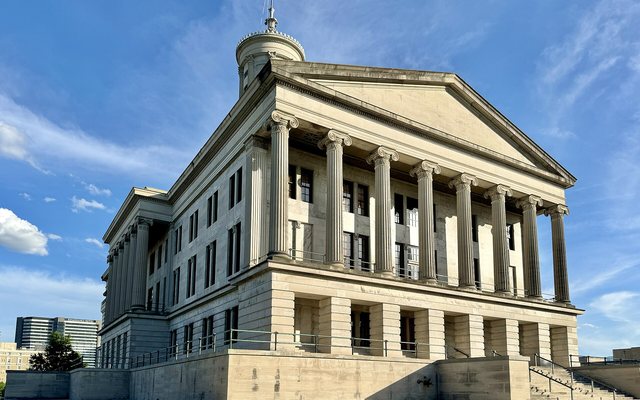 Tennessee State Capitol · w_lemay / CC BY-SA 2.0 National Comparison
 Tennessee required condo boards to update reserve studies every five years. New York's bill did not advance.
Tennessee SB 863 requires condo associations with common elements worth more than $10,000 to maintain a reserve study, update it every five years, review funding annually, and make it available to owners electronically. New York's bills A8945 and S7600 were referred to committee in January 2026 and received no floor vote.
Manhattan Municipal Building (NYC Dept. of Finance) · Kidfly182 / CC BY 4.0 Tax Alert DOF fixed 1,210 pied-à-terre errors. The fix revealed a policy choice.
New York State sent DOF its 2025 income-tax records six months early. DOF used that data to clear 1,210 property owners wrongly included in the pied-à-terre first mailing, then sent 11,000 new notices to owners the 2025 records flagged. The mechanism DOF improvised is what a primary-residence registry would do automatically. New York has no such registry.
 Oregon State Capitol · M.O. Stevens (public domain) National Comparison
 Oregon required annual reserve studies in 1999. New York has nothing.
Oregon Revised Statutes § 100.175 has required every condominium board formed after October 23, 1999 to conduct or update a reserve study annually and prohibited owner votes that would leave the account underfunded. New York's companion bills A8945 and S7600 were referred to committee in January 2026 and received no floor vote before Albany adjourned June 18, 2026.
Florida State Capitol, Tallahassee National Comparison Florida required condo boards to post records online. New York's transparency bill passed the Senate and stopped.
Florida Statute §718.111(12)(g) now requires condo associations with 25 or more units to maintain a password-protected online portal for governing documents, meeting minutes, budgets, and contracts. New York's Condominium Act requires boards to produce records on written request. The gap is a policy choice.
Empire State Plaza, Albany · Own work of Jer21999 (from en.wikipedia) (public domain) Mandate Alert LL87 energy audits are due December 31. Your managing agent needs no license to file them.
Buildings with tax block numbers ending in 6 owe a Local Law 87 Energy Efficiency Report to the Department of Buildings by December 31, 2026. A first-year failure costs $3,000 under Administrative Code § 28-308.5. The managing agent who controls the auditor selection and filing has no state license, faces no professional discipline for a deficient submission, and carries no vendor-independence obligation under New York law. S.71 has not advanced in ten consecutive legislative sessions.
Empire State Plaza, Albany · Own work of Jer21999 (from en.wikipedia) (public domain) Mandate Alert NYC has run a managing agent registry for decades. Still no license required.
By September 1, every NYC building with six or more units must file its annual HPD Property Registration under Housing Maintenance Code § 27-2097, naming its managing agent and providing a physical address for service of process. The city has collected this information for decades. The registration form accepts anyone who is 21 and has a New York City street address. No license number is required because New York State issues none. Local Law 58, which took effect July 28, made managing agents liable for co-op application timelines. It added no license requirement.
Midtown Manhattan · CommunistSquared (cc0) Regulatory Gap A co-op overpaid property taxes for 40 years. New York returned six years of it.
When the Department of Finance recorded the wrong square footage for an Upper West Side co-op building, the board overpaid property taxes for more than 40 years. The city corrected the error and returned six years of overpayments, the ceiling set by NYC Administrative Code § 11-1787. No statute required the board to check the number. The managing agent who should have been monitoring the record holds no state license.
Midtown Manhattan · CommunistSquared (cc0) Legislation Co-op rejection reasons: required in Westchester since 2021, stalled in NYC.
Int. 0774-2026 would require NYC co-op boards to give rejected applicants a written explanation within five days. Westchester County has had the same requirement since 2021. The councilmembers representing the most co-op units in the city are not sponsoring the bill.
Midtown Manhattan · CommunistSquared (cc0) Disclosure Local Law 58 gave co-op boards a 45-day deadline. The bill for buyer financial records did not advance.
Int. 426-2026 would have required NYC co-op sellers to give prospective buyers financial information about the building before signing. It was not scheduled for a floor vote. The Council of New York Cooperatives and Condominiums filed a formal opposition: the bill increases cost and liability.
Midtown Manhattan · CommunistSquared (cc0) Regulatory Gap Nationwide, HOA reserves are running out. New York has no reserve requirement.
ATTOM Data Solutions counted 6,376 HOA-related foreclosure filings in the first quarter of 2026, a nearly 40 percent increase from two years earlier. Three quarters of associations are less than 70 percent funded. New York has no reserve study mandate and no agency to enforce one.
Midtown Manhattan · CommunistSquared (cc0) Legislation Albany is about to require public listings for home sellers. Condo and co-op buyer disclosure did not move.
The Fair and Transparent Real Estate Listings Act passed both chambers of the New York Legislature in June 2026 and was delivered to Governor Hochul. Its disclosure form runs from broker to seller. The parallel bills that would have given condo and co-op buyers a right to engineering reports and financials before signing stayed in committee.
Midtown Manhattan · CommunistSquared (cc0) Disclosure Manhattan luxury co-ops outsold new-development condos last week. Buyers have no statutory right to the books before signing.
Olshan's luxury report counted 12 Manhattan co-op contracts above $4 million against 10 new-development condo contracts in the week ending August 17, the first time since September 2022 co-ops led in the luxury tier. New York's PCDA explicitly excludes cooperative apartments. Buyers have no statutory right to building financials before the board votes.
Midtown Manhattan · CommunistSquared (cc0) Disclosure New York's condo boards must delete discriminatory covenants by June 2027. Buyers have no right to know they're there.
NY RPL §327-a, effective June 3, 2026, requires condo and co-op boards to remove discriminatory covenants from governing documents by June 3, 2027, without a unit owner vote. New York's Property Condition Disclosure Act excludes condo and co-op buyers. No seller is required to show a buyer the governing documents before closing.
Midtown Manhattan · CommunistSquared (cc0) Mandate Alert NYC gave renters the right to air conditioning by 2030. Co-op subletters are the landlord. Sellers don't have to say so.
Local Law 23 of 2026 requires every NYC landlord to provide cooling in sleeping areas by June 1, 2030. For co-op shareholders who sublet, that obligation is theirs. New York's Property Condition Disclosure Act excludes co-op apartments. No seller is required to mention Local Law 23 or the building's electrical capacity before a buyer signs.
Midtown Manhattan · CommunistSquared (cc0) Disclosure NYC gave co-op buyers a deadline. It did not give them the books.
Local Law 58 of 2026 gave NYC co-op buyers a 45-day decision clock starting July 28. The City Council heard a companion bill that same session that would have entitled approved buyers to see building financials before signing. That bill was never scheduled for a floor vote. The rejection-reasons bill from the same hearing has been reintroduced as Int. 0774-2026 in the current session.
 Downtown Los Angeles skyline · Levi Clancy / CC BY-SA 4.0 National Comparison
 A reporter counted every condo in an LA tower. New York exempts what she found.
Independent journalist Yoonj Kim pulled county ownership records for all 822 condos at the Metropolis in downtown Los Angeles and found 281 held by the developer, every one flagged mail-vacant by the Postal Service. New York City has better records and two separate primary-residence flags. RPTL 467-a exempts sponsors by name, and Tax Law 1351(g) excludes any unit under a 352-e offering plan that has not been sold.
Arizona State Capitol / CC BY 2.5 National Comparison Arizona expanded its condo resale disclosure law. New York has none.
Arizona signed HB 2397 in June 2026, adding board meeting minutes, violation notices, and expanded financial statements to every condominium and HOA resale packet, effective September 12, 2026. New York Real Property Law section 461 exempts condo and co-op buyers from seller disclosure. Arizona's expansion reveals the depth of New York's baseline gap.
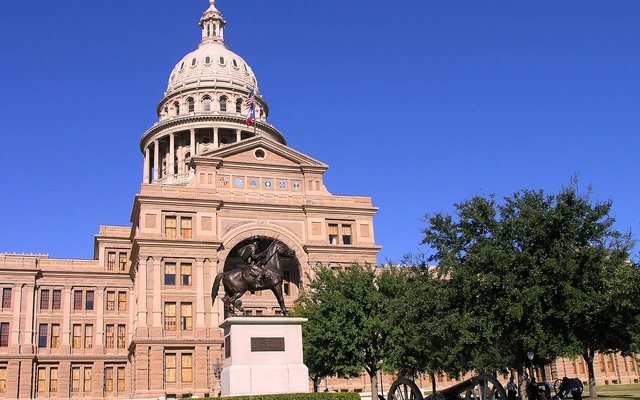 Texas State Capitol · Daniel Mayer / CC BY-SA 3.0 National Comparison
 Texas required every condo association to post its governing documents online. New York has no equivalent.
Texas Senate Bills 711 and 2629, effective September 1, 2025, require condominium associations with 60 or more units to post governing documents online, file a management certificate naming the agent with the Texas Real Estate Commission, and offer electronic voting. New York has no equivalent requirement for any of the three.
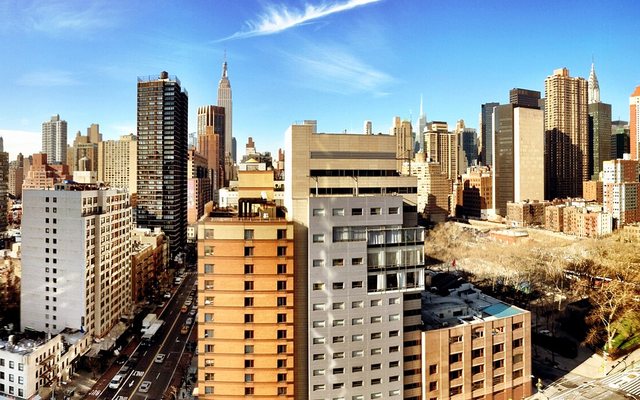 Murray Hill, Manhattan · marc.flores / CC BY 2.0 Renters
 Manhattan's average rent hit a record $6,655. The 1.49% vacancy rate quoted beside it is June's number, and it is not the city's.
Corcoran's July report put the Manhattan average rent at $6,655 and the Manhattan vacancy rate at 1.56%, up from 1.49% in June. The 1.41% figure that is the lowest since 1968 comes from the city's triennial housing survey, and that survey put Manhattan at 2.33%, the loosest of the four boroughs it could measure.
Empire State Plaza, Albany · Own work of Jer21999 (from en.wikipedia) (public domain) Mandate Alert New York's state cooling tower law adds biannual certifications and fines up to $12,500. LL159 is not the only obligation now.
Governor Hochul signed S8472-A on August 5, 2026, adding biannual cooling tower certifications for New York City buildings and raising the maximum civil penalty to $12,500. The law layers on top of Local Law 159 of 2025 and creates new calendar obligations and response-time clocks for condo and co-op boards.
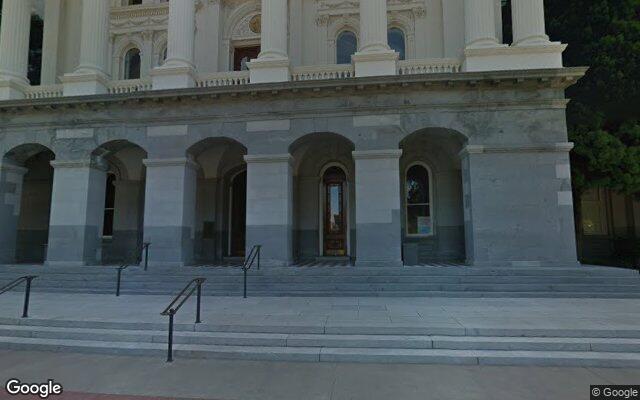 California State Capitol, Sacramento National Comparison
 California prohibited charging interest on condo and HOA fines. New York has no cap and no interest ban.
California Assembly Bill 130, signed June 30, 2025, caps HOA and condo board fines at $100 per violation, prohibits charging interest or late fees on those fines, and requires internal dispute resolution before collection. New York's Condominium Act and Business Corporation Law contain none of these provisions.
Fannie Mae headquarters, Washington, D.C. · Carol M. Highsmith / LOC (public domain) Regulatory Gap The condo industry's own trade organization backs mandatory reserve studies. New York's bill didn't advance.
The Community Associations Institute represents managing agents, attorneys, and vendor firms. Its June 2026 Condominium Safety Public Policy Report recommends mandatory reserve studies for every state. Eighteen states have the requirement. New York's companion bills were referred to committee in January 2026 and the session ended without a floor vote.
 Illinois State Capitol, Springfield · Daniel Schwen / CC BY-SA 4.0 National Comparison
 Illinois required condo and HOA boards to adopt a written collection policy. New York hasn't.
Illinois Senate Bill 3527, signed into law July 31, 2026, requires every condo and homeowners association board in Illinois to adopt a written collection policy and include it in every resale disclosure packet. New York imposes no equivalent on condo or co-op boards.
Empire State Plaza, Albany · Own work of Jer21999 (from en.wikipedia) (public domain) Disclosure The federal beneficial ownership data for U.S. companies is being deleted. New York's condo sponsor LLCs were never in the state version.
On August 11, 2026, FinCEN permanently removed all U.S.-formed companies from the federal beneficial ownership database and announced it will delete previously filed data. New York's LLC Transparency Act was already limited to foreign LLCs. The GAO found that Treasury has no plan to address the gap.
Empire State Plaza, Albany · Own work of Jer21999 (from en.wikipedia) (public domain) Regulatory Gap A PE firm bought a bankrupt condo sponsor at foreclosure and denied owning it. The Martin Act had one answer.
SME Capital Ventures acquired The Westerley's sponsor entity at a foreclosure auction in October 2023, then refused to pay the building's bills, maintain safety inspections, or transfer board control to the nine unit owners. After a two-year AG investigation, the settlement cost them $700,000. Here is what the Martin Act can reach, and what it cannot.
 Richmond County Courthouse, Staten Island · Shannon (Shan213) / CC BY-SA 2.0 Tax Alert
 A judge ordered the pied-à-terre database taken down. The city undid it the same evening, and nothing about September 18 changed.
Justice Wayne M. Ozzi granted a temporary restraining order in O'Brien v. City of New York on August 10, finding the notices were not proper notice under the tax law and that no law permitted publishing a list of 900,000 homeowners. The city served an appeal hours later and the order was stayed automatically under CPLR 5519(a)(1), because a political subdivision gets that stay by filing paper. Two findings in the record have gone unreported, both specific to co-ops: DOF published 36,700 individual apartment valuations that had never been public, reaching apartments whose only link to the surcharge is a neighbour's share allocation, and DOF was formally asked to let comparable sales correct the $1 million co-op threshold and declined.
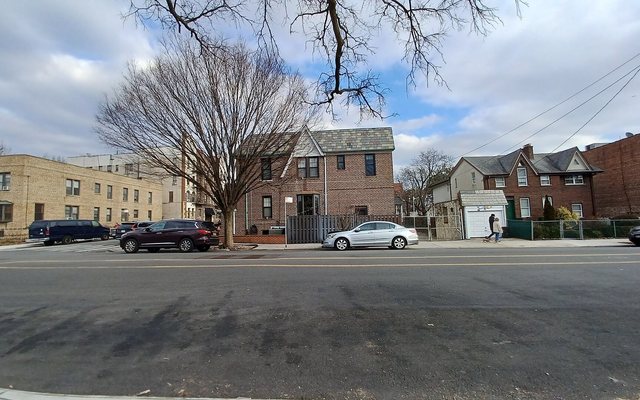 Bay Ridge, Brooklyn · GK tramrunner RU / CC BY-SA 4.0 Regulatory Gap
 Three condo boards controlled access to a $2B NYC flood project. New York required no disclosure to their unit owners.
Three Battery Park City condominium boards held the access rights the Battery Park City Authority needed to build Lower Manhattan's $2 billion coastal flood barrier. Two boards refused BPCA's terms and forced a project redesign. One is being sued. New York's Condominium Act imposed no duty on any of those boards to notify their unit owners of any of it.
Midtown Manhattan · CommunistSquared (cc0) Mandate Alert Your building's energy grade posts publicly October 31. New York gives sellers no disclosure duty.
Local Law 33 of 2018 requires every NYC building above 25,000 square feet to post an ENERGY STAR letter grade at each public entrance by October 31, 2026. Most large NYC buildings receive a C, D, or F. New York Real Property Law § 461 excludes condo and co-op units from seller disclosure. Sellers have no duty to mention the grade before a buyer signs.
Manhattan Municipal Building (NYC Dept. of Finance) · Kidfly182 / CC BY 4.0 Tax Alert New York's pied-à-terre tax rollout faces its first court test.
On August 7, three NYC homeowners filed suit in Richmond County Supreme Court challenging the pied-à-terre surcharge rollout. O'Brien v. City of New York (case no. 85217/2026) does not challenge Tax Law Article 30-C. It argues that DOF published 960,000 homeowner names in a searchable database before determining anyone owed the tax, reversing the burden of proof.
Midtown Manhattan · CommunistSquared (cc0) Regulatory Gap The co-op and condo industry quantified $5,859 in annual cost increases. Here is what its proposed remedies leave out.
CNYC's Keep Our Homes Affordable analysis surveyed more than 1,200 buildings and found $5,859 per household in annual cost increases since 2019, driven by insurance and Local Law 97. Three accountability measures with pending bills are absent from the group's proposals to the Mamdani administration.
Maryland State Capitol · Marylandstater of English Wikipedia (public domain) National Comparison Maryland mandated reserve plans and independent elections for condo owners. New York hasn't.
Maryland Chapter 512 and Chapter 519, both effective October 1, 2025, required condo board elections to use an independent overseer, mandated reserve budgets at the study recommended level, and classified lot owners as consumers with state AG enforcement rights. New York equivalent bills received no floor vote before Albany adjourned June 18, 2026.
Manhattan Municipal Building (NYC Dept. of Finance) · Kidfly182 / CC BY 4.0 How To New York has no primary-residence registry. Here is what co-op and condo owners must do about the pied-à-terre notice before September 18.
On August 1, 2026, Mayor Mamdani extended the pied-à-terre surcharge exemption deadline to September 18 after 959,710 properties appeared on the DOF supplemental roll to find roughly 13,000 pieds-à-terre. New York has no primary-residence registry. Here is what co-op and condo owners must do before the window closes.
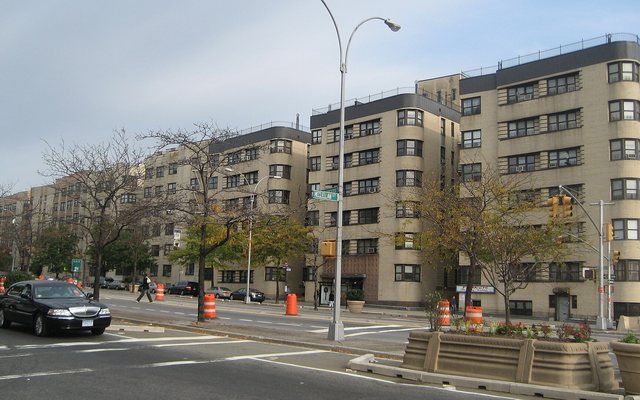 Grand Concourse, the Bronx · MMZach / CC BY-SA 3.0 Renters
 The Extraction Economy: why your landlord shouldn't be getting richer while you get poorer
A new work-from-home surcharge on a lease renewal corresponds to no cost the landlord incurs. It corresponds to an opportunity. This essay traces the machinery that converts the need for shelter into an income stream, from the depreciation deduction to algorithmic rent-setting, and then runs the same test on New York condominium and cooperative ownership, where the monthly cost is set by a board you cannot appeal, the person administering the budget needs no license, and no agency takes the complaint.
Empire State Plaza, Albany · Own work of Jer21999 (from en.wikipedia) (public domain) Regulatory Gap Sponsor board service doesn't buy indemnification against the board.
The Appellate Division, First Department held in June 2026 that standard indemnification language in NYC condo governing documents cannot be used by a former sponsor-board member to force the board to fund their defense in the board's own lawsuit. New York has no statute requiring arms-length review of sponsor-drafted governing documents before buyers are bound by them.
Fannie Mae headquarters, Washington, D.C. · Carol M. Highsmith / LOC (public domain) Regulatory Gap New York's condo insurance law sets no floor. Fannie Mae just set one.
New York Real Property Law §339-BB requires condo boards to insure the building only if the declaration demands it, leaving most NYC condominiums with no state insurance floor since 1964. Fannie Mae LL-2026-03, effective August 3, 2026, fills that gap for buildings seeking conventional financing, but thousands of NYC condominiums are outside Fannie's reach.
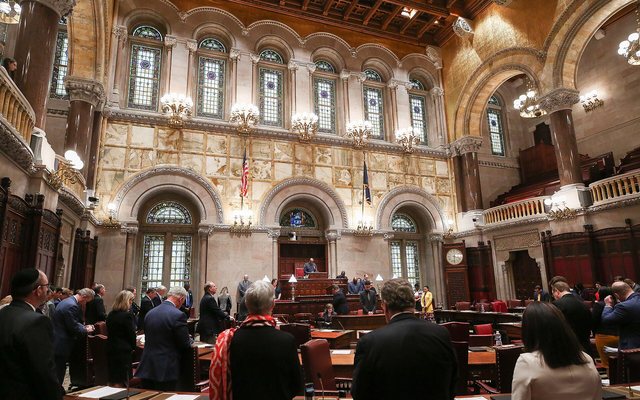 NY State Senate Chamber, Albany · NY Senate Photo / CC BY 2.0 Regulatory Gap
 A managing agent illegally evicted four tenants. New York has no license to revoke.
The New York Attorney General settled with Spigro Management LLC in 2026 after finding it had illegally evicted four tenants in Brooklyn and Bronx buildings, including co-ops and condos. The penalty: $23,500. No managing agent license was at risk because New York imposes no license requirement. S.71 has not received a committee hearing in ten consecutive sessions.
North Carolina State Capitol, Raleigh · Farragutful / CC BY-SA 4.0 Regulatory Gap A lawyer's warning about defunct owners associations has 1.07 million views. New York gives you no way to check.
A North Carolina real estate attorney's warning about defunct and underfunded owners associations has passed 1.07 million views. North Carolina requires boards to budget adequate reserves. New York imposes no ongoing duty on any condo board, co-op board, or homeowners association, and its one reserve law binds the sponsor once at conversion. The operative reserve standard for NYC condos is set by Fannie Mae.
Florida State Capitol, Tallahassee National Comparison Florida made structural condo reserves non-waivable in 2024. New York's equivalent bill never moved.
Florida Statute 718.112, amended by SB 4-D (2022) and SB 154 (2023), bans condo boards in buildings three or more stories from waiving or reducing funding for eight structural components. New York's reserve study bills, A8945 and S7600, were referred to committee in the 2025-2026 session and received no floor vote before Albany adjourned June 18, 2026.
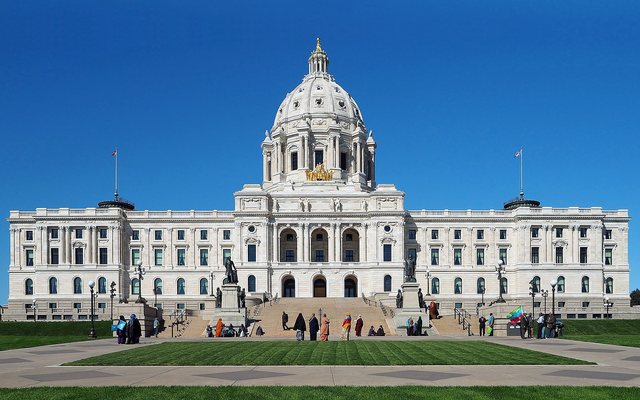 Minnesota State Capitol · McGhiever / CC BY-SA 4.0 National Comparison
 Minnesota capped condo board fines and created an owner ombudsman. New York has neither.
Minnesota Chapter 82, signed May 12, 2026, caps board fines at $100, bans retaliation, and creates a private right of action with attorney-fee protection. A 2025 companion statute established a state ombudsperson. New York has no equivalent. S7745, the NY condo ombudsperson bill, received no floor vote before Albany adjourned June 18, 2026.
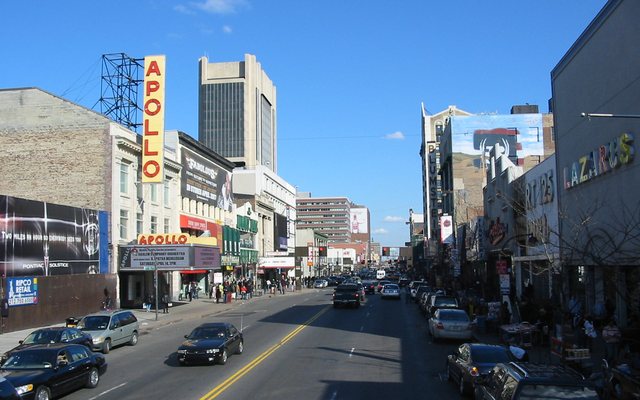 125th Street, Harlem · Rup11 / CC BY-SA 3.0 Regulatory Gap
 New York has $22 billion to build affordable homes and $750,000 to save the ones it already built.
The LIFT tracker maps more than 100 city-owned sites carrying upward of 50,000 planned homes, and does not publish how many will be owned rather than rented. New York converted public buildings into affordable ownership once before. More than 1,000 of those HDFC co-ops remain in HPD's portfolio, the Attorney General states that a high number are at high risk, and the 2025 rescue was $750,000 of settlement money for 20 to 30 of them. Fourth on the state's own list of causes, in its own words: governance issues.
Washington State Capitol, Olympia · Farragutful / CC BY-SA 4.0 National Comparison Washington enacted a 26-item condo resale disclosure law in 2026. New York has no equivalent.
Washington's WUCIOA (RCW 64.90), expanded to all associations on January 1, 2026, requires a 26-item resale certificate, a $275 fee cap, and a non-waivable five-day buyer cancellation right. New York's Real Property Law section 461 excludes condos and co-ops from seller disclosure. Neither the reserve study bill nor the transparency bill received a floor vote.
 Manhattan Municipal Building (NYC Dept. of Finance) · Kidfly182 / CC BY 4.0 Tax Alert
 Taxed as a rental building. Exempt from every rental protection.
The Department of Finance published 959,710 property records on July 24 and mailed roughly 17,000 letters, 56 records made public for every owner actually billed. The widely reported claim that Phase One hits apartment owners five times harder does not survive the valuation math. The real defect is in the city Comptroller's own study: a flat rate applied to a valuation that swings from 11 to 24 percent of sales value, leaving the ordinary co-op owner at roughly 2.2 times the effective rate of the luxury condo owner. Underneath sits the arrangement that allowed it, where RPTL 581 values your apartment as a rental building and RPL 214(7) exempts it by name from every rental protection.
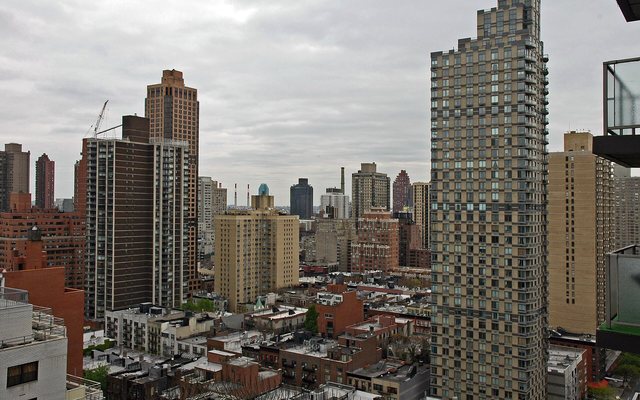 Yorkville, Manhattan · The original uploader was Leifern at English Wikipedia / CC BY-SA 3.0 Regulatory Gap
 NYC has a standard condo renovation contract. Boards don't have to use it.
In February 2026, the NYC Bar Association published a model alteration agreement for condo unit owners. New York's Condominium Act sets no minimum for what that contract must say and no requirement that boards use it. The managing agent who drafts your building's version needs no state license.
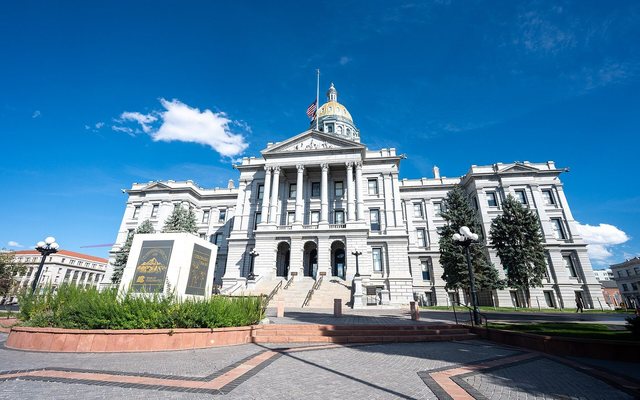 Colorado State Capitol, Denver · xiquinhosilva / CC BY 2.0 National Comparison
 Colorado required reserve studies at new condo turnover. New York still hasn't.
Colorado HB 26-1099, effective August 12, 2026, requires every condo developer to commission an independent 30-year reserve study before the first unit is sold. New York's companion bills A8945 and S7600 were referred to committee in 2025 and received no hearing before Albany adjourned June 18, 2026.
Lower Manhattan · King of Hearts / CC BY-SA 3.0 Mandate Alert Albany backed off the 2030 climate target. NYC's LL97 penalty schedule is unchanged.
New York's FY2027 budget removed the state's legally binding 2030 climate target and shifted GHG accounting methodology. Local Law 97, which fines NYC buildings $268 per metric ton of CO2 over their cap, is a city statute. Albany has no power to amend it and did not. The 2024 penalty collection is underway. The 2030 cap tightens on schedule.
Fannie Mae headquarters, Washington, D.C. · Carol M. Highsmith / LOC (public domain) Disclosure When your building loses conventional financing, New York doesn't require your seller to tell you.
New York Real Property Law §461 explicitly excludes condominium units and cooperative apartments from the Property Condition Disclosure Act. As Fannie Mae's August 3, 2026 changes take effect and at least 66 NYC buildings sit on the agency's unavailable list, no state law requires sellers to disclose that fact before a buyer signs.
Fannie Mae headquarters, Washington, D.C. · Carol M. Highsmith / LOC (public domain) How To What your reserve study's funding method means after August 3.
Starting August 3, 2026, Fannie Mae LL-2026-03 prohibits baseline-funded reserve studies as evidence of adequate reserves. Buildings that voluntarily chose the baseline method to minimize common charges are 13 days from finding that choice works against them in a full review. Here is how to check your study and what to do.
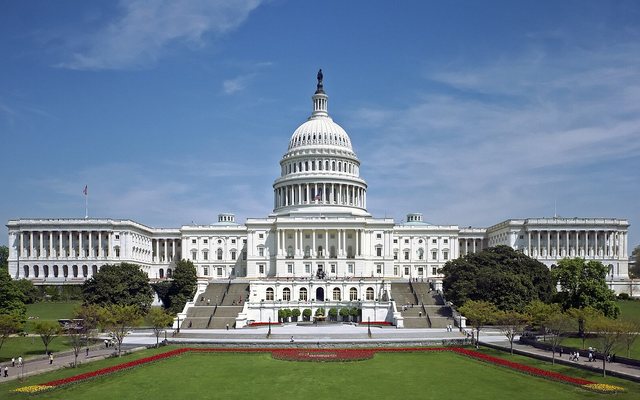 U.S. Capitol, Washington, D.C. · Architect of the Capitol (public domain) Legislation
 The biggest federal housing law in 30 years skips condo and co-op governance.
The 21st Century ROAD to Housing Act (H.R. 6644) became law July 11, 2026 without the president's signature, passing veto-proof. Its headline ban on corporate investors is written around single-family homes of two or fewer units, so it does not reach the multi-unit condos and co-ops where investor concentration turns into a Fannie Mae financing shutdown. It contains nothing on reserves, managing-agent licensure, or board accountability.
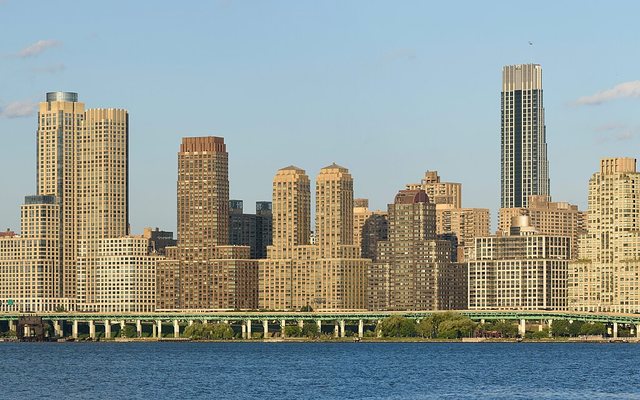 Upper West Side, Manhattan · King of Hearts / CC BY-SA 4.0 Regulatory Gap
 An untouchable board and no standard to hold it to: how NY law steers condos and co-ops toward default.
New York's business judgment rule (Levandusky) puts a board's financial decisions beyond owner challenge, and no state law defines what a sound reserve or budget is. With no internal correction, the first actor to price a building's hidden fragility is the mortgage market, and its correction arrives as a default event. At least 39 NYC condo and co-op buildings already sit on Fannie Mae's unavailable list.
Empire State Plaza, Albany · Own work of Jer21999 (from en.wikipedia) (public domain) Regulatory Gap NYC required monthly cooling tower tests in May. Most buildings hadn't complied.
Local Law 159 of 2025 required monthly Legionella testing for all registered NYC cooling towers starting May 8, 2026. By July 14, 560 cooling towers had not submitted a test since at least 2025, and 388 had never submitted one. Two people died in the Upper East Side Legionnaires' cluster.
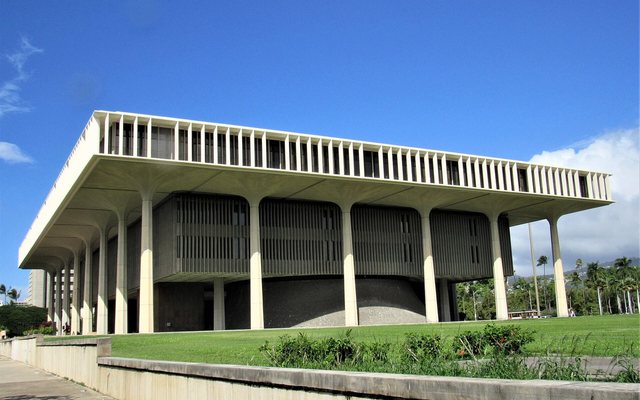 Hawaii State Capitol, Honolulu · Farragutful / CC BY-SA 4.0 National Comparison
 Hawaii mandated annual condo audits in 2006. New York has no equivalent.
Hawaii Revised Statutes Chapter 514B (effective July 1, 2006) requires every condominium association with 20 or more units to obtain an annual audit from a public accountant and base its budget on a reserve study updated every three years by an independent preparer. New York's Condominium Act requires neither.
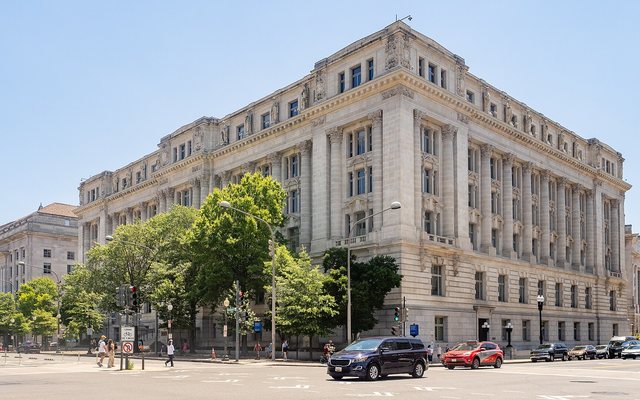 John A. Wilson Building, Washington, D.C. · ajay_suresh / CC BY 2.0 National Comparison
 Washington D.C. licensed property managers in 1999 and codified their fiduciary duty. New York's bill has never had a committee hearing.
D.C. Law 12-261, enacted April 20, 1999, required property managers overseeing condominiums, co-ops, and HOAs in the District to pass a written exam and complete 15 hours of continuing education. D.C. Code § 47-2853.195 codified a statutory fiduciary duty. New York Senate Bill S.71 has not received a committee hearing in ten consecutive sessions.
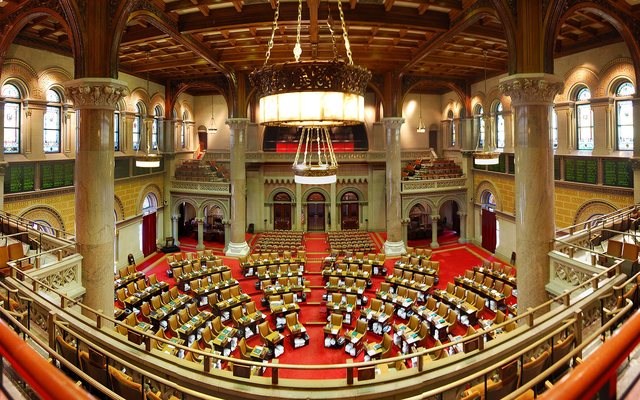 NY State Assembly Chamber, Albany · Matt H. Wade / CC BY-SA 3.0 Legislation
 New York's Senate voted 60-0-2 for a condo owner's bill of rights. Albany adjourned without it.
NY Senate Bill S5089 passed the full Senate 60-0-2 in April 2025, promising condo unit owners transparency rights and AG enforcement authority. Two Assembly companion bills were referred to the Housing Committee and never scheduled. The 2025-2026 session ended June 18, 2026 without action.
Georgia State Capitol, Atlanta · DXR / CC BY-SA 4.0 National Comparison Georgia required community association manager licensing in 1997. New York's bill has never received a hearing.
Georgia's Real Estate Commission has licensed community association managers since July 2, 1997, requiring a 25-hour prelicense course, a state examination, and a GCIC criminal background check. New York Senate Bill S.71, the managing-agent registration bill, has not received a committee hearing in ten consecutive sessions.
Manhattan Municipal Building (NYC Dept. of Finance) · Kidfly182 / CC BY 4.0 Tax Alert One shareholder's unpaid pied-à-terre surcharge can lien your entire co-op. DOF's proposed rules don't change that.
NY Tax Law Article 30-C took effect July 1, 2026. For co-ops, DOF bills the aggregate surcharge to the corporation as a single tax lot. If one shareholder doesn't pay, the lien attaches to the whole building. Buyers of co-op shares have no statutory disclosure right to the seller's surcharge status. DOF's proposed rules don't resolve either gap.
New York State Capitol, Albany · Shaunfrombrooklyn / CC BY-SA 4.0 Regulatory Gap The AG's condo conversion comment period closed July 12. What happens next is not defined by law.
New York's State Administrative Procedure Act required a 60-day public comment window on the AG's proposed occupied-conversion rules. That window closed July 12, 2026. SAPA sets no mandatory deadline for finalization. Seven years after HSTPA 2019 changed the occupied-conversion framework, the implementing regulations remain in proposed form.
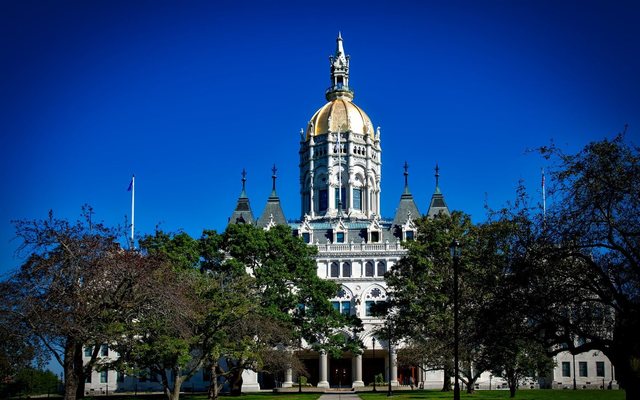 Connecticut State Capitol, Hartford · CC0 National Comparison
 Connecticut required community association manager registration in 1991. New York still doesn't.
Connecticut enacted Public Act 90-306 in 1991, requiring community association managers to register with the Department of Consumer Protection. A 2012 overhaul added a written-examination requirement for new entrants. New York Senate Bill S.71, the managing-agent registration bill, has not received a committee hearing in ten consecutive sessions.
Lower Manhattan · King of Hearts / CC BY-SA 3.0 How To How condo boards can use the NYCEEC MEG loan to fund LL97 upgrades.
NYC Energy Efficiency Corp.'s Multifamily Express Green loan finances condo energy projects up to $800,000 with a six-week close and no blanket mortgage lender consent required. Only five NYC buildings had used it before a Bed-Stuy condo closed a $482,000 deal in May 2026. Here is what boards need to start.
Illinois State Capitol, Springfield · Daniel Schwen / CC BY-SA 4.0 National Comparison Illinois licensed community association managers in 2010. New York's equivalent bill has never moved.
Illinois enacted its Community Association Manager Licensing and Disciplinary Act in 2010, requiring 20 hours of pre-license education, a state exam, and IDFPR oversight. When the law faced a January 2027 sunset, the 2026 legislature extended it through 2032. New York Senate Bill S.71 has not received a committee hearing in ten sessions.
NY State Senate Chamber, Albany · NY Senate Photo / CC BY 2.0 Legislation NY's condo ombudsman bill did not advance for the second consecutive session.
NY Senate S7745 would have created a Cooperative and Condominium Ombudsperson Program within DHCR, funded by a $6-per-unit annual fee, providing mediation, owner education, election monitoring, and a statewide registry. The bill was referred to committee in January 2026 and received no floor vote before Albany adjourned. A predecessor bill, S6242, produced the same result in the prior session.
New York State Capitol, Albany · Shaunfrombrooklyn / CC BY-SA 4.0 Regulatory Gap New York's AG filed its first rent stabilization lawsuits. Here is what they reveal about the condo governance gap.
In June 2026, the NY Attorney General filed its first-ever lawsuits under a rent stabilization compliance program, citing Executive Law §63(12). For condo and co-op unit owners, the cases mark the exact boundary of AG enforcement authority — and what falls outside it.
 Nevada State Capitol, Carson City National Comparison
 Nevada certified community managers in 2005 and gave owners a state ombudsman. New York has neither.
Nevada Revised Statutes Chapter 116A has required community manager certification since 2005, with 60 hours of approved education, a fingerprint background check, and a statutory fiduciary duty. The state ombudsman for common-interest community owners has operated since 1997. New York's equivalent bills have not advanced.
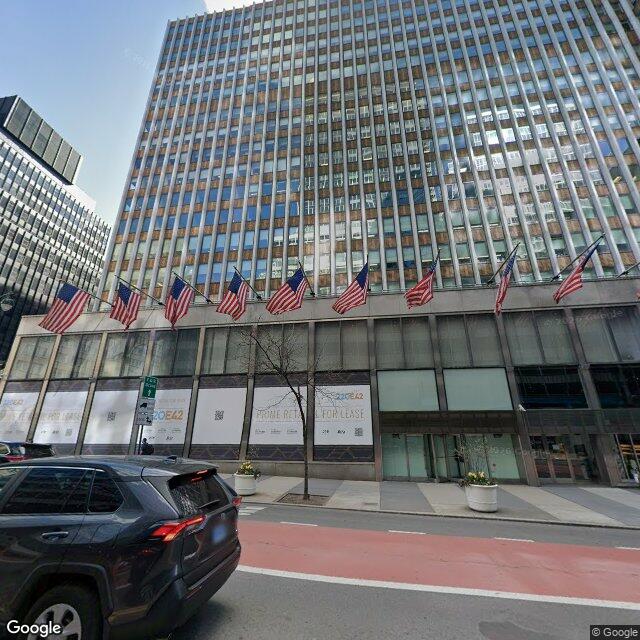 Google Street View Breaking
 The largest U.S. office-to-resi conversion buckled mid-construction. The DOB had already written it up seven times.
Two support columns buckled and upper floors sagged at 235 East 42nd Street — the former Pfizer headquarters, now the largest office-to-residential conversion in the United States. Officials evacuated the tower, a school of roughly 400 children, and seven neighboring buildings on July 7. The site had drawn seven DOB construction-safety violations in 2025, six rated immediately hazardous. None were paid. Each was closed with a certificate of correction.
Park Slope Historic District, Brooklyn · Jim.henderson / CC BY-SA 4.0 How To Co-op boards have 21 days to protect their summer calendar.
NYC Local Law 2026/058 takes effect July 28, 2026, and places co-op boards on a 15-day and 45-day purchase application clock. The law contains one mechanism to pause those clocks through the summer: a written recess notice adopted before July 28. Here is what the document must say and what boards lose if they miss the window.
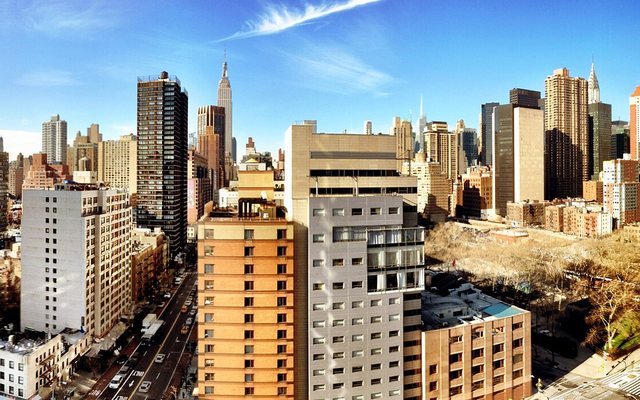 Murray Hill, Manhattan · marc.flores / CC BY 2.0 Mandate Alert
 NYC repealed the 1968 building code. The Existing Building Code is next.
Local Law 33 of 2026 creates the first standalone NYC Existing Building Code and repeals Title 27 of the Administrative Code, effective July 17, 2027. The cost-based compliance trigger that governed renovations in pre-1968 buildings is gone. A Work Area method replaces it: bigger renovation footprints trigger accessibility and energy-conservation upgrades that the old threshold made easier to defer.
 Long Island City, Queens · King of Hearts / CC BY-SA 3.0 Regulatory Gap
 485-x has a 99-unit floor. NYC developers found it in two years.
Real Property Tax Law § 485-x replaced 421-a in April 2024 and set a hard threshold at 100 units. In the 16 years before the statute, 13 NYC buildings were permitted with exactly 99 apartments. In two years after, developers filed permits for more than 120. A second workaround uses condo declarations to split larger buildings.
Midtown Manhattan · CommunistSquared (cc0) Regulatory Gap NYC building workers have a four-year contract. Your co-op board didn't negotiate it.
The RAB-32BJ four-year agreement ratified in June 2026 locks in $4.50 per hour in wage increases for 34,000 NYC building workers through April 2030. A 15% pension improvement became effective July 2026. Co-op boards had no seat at the negotiating table, and New York requires no cost projection to unit owners when it does.
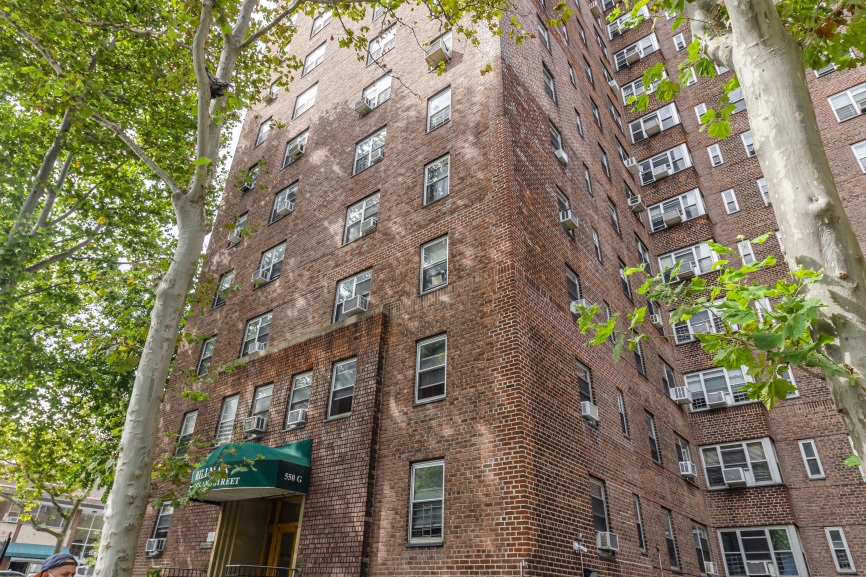 Hillman Houses, LES Regulatory Gap
 NYC co-op boards can reject you without a reason. Westchester County disagrees.
Local Law 2026/058 gives NYC co-op boards a 45-day decision clock starting July 28. It does not require them to explain a rejection. Westchester County has required a written rejection reason since 2021. Without a reason on the record, fair housing enforcement in NYC co-ops has no starting point.
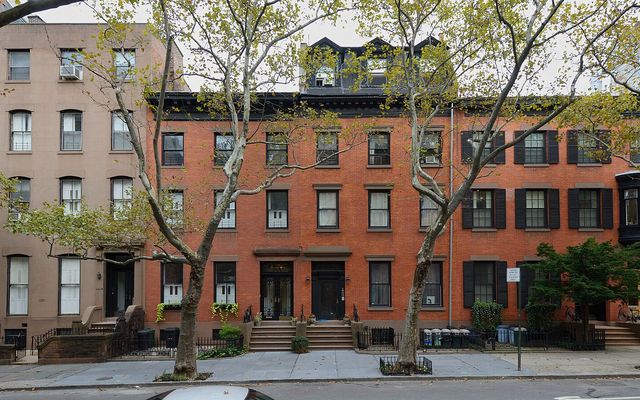 Brooklyn Heights townhouses · Rickbern / CC BY-SA 3.0 Regulatory Gap
 Co-op buyers now have a 45-day application clock. Condo buyers don't.
NYC Local Law 2026/058 gives co-op buyers a 15-day acknowledgment clock and a 45-day board decision clock, enforced by HPD with fines starting at $1,000. Condominiums are entirely excluded. No city statute sets a deadline for condo boards to act on a right-of-first-refusal waiver. The gap is not accidental.
New York State Capitol, Albany · Shaunfrombrooklyn / CC BY-SA 4.0 Regulatory Gap A six-year enforcement gap on condo offering plans ended July 1, 2026.
Since March 2020, the AG's Real Estate Finance Bureau did not pursue sponsors marketing condo units under expired offering plans. That enforcement pause ended July 1, 2026. Here is what the six-year gap permitted, what changes now, and why buyers who transacted during the gap period have no retroactive remedy.
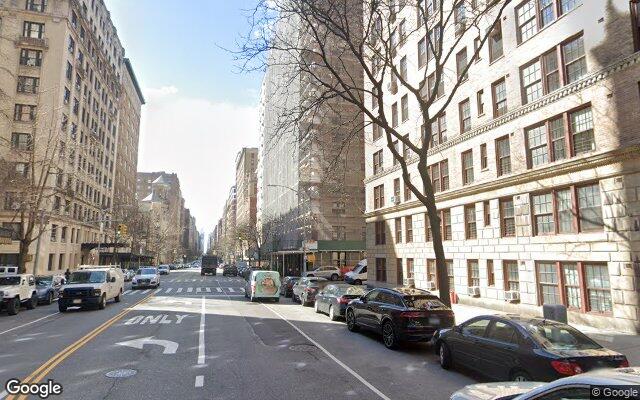 304 West 89th Street How To
 How NYC co-ops can use C-PACE financing: lessons from the first deal.
304 West 89th Street on the Upper West Side became the first NYC co-op to close a C-PACE loan in April 2026. Getting the blanket mortgage lender's written consent took nine months. Here is what the deal required, how the LL97 fine math works, and what boards need to plan before starting.
Manhattan Municipal Building (NYC Dept. of Finance) · Kidfly182 / CC BY 4.0 How To How co-op boards collect the pied-à-terre surcharge from shareholders.
New York Tax Law Article 30-C took effect July 1, 2026. The statute makes your co-op corporation the pied-à-terre surcharge collector, but most proprietary leases do not yet authorize that collection. Here is what boards need to do before the August 30 DOF notice arrives.
Murray Hill, Manhattan · marc.flores / CC BY 2.0 Mandate Alert LL97's June 30 grace period: what late filers and over-limit buildings owe.
The 60-day grace period for NYC Local Law 97 annual emissions reporting ends June 30, 2026. Buildings that have not filed face $0.50 per square foot per month starting July 1. Buildings over their 2025 cap owe $268 per metric ton of CO2-equivalent. The Good Faith Effort plan deadline passed May 1, 2026.
Midtown Manhattan · CommunistSquared (cc0) Regulatory Gap A developer stopped paying common charges. Here is what the condo board can legally do.
Seven units at a Flower District condo in Manhattan have not paid common charges since October 2024. New York gives condo boards a lien and foreclosure rights, but the October 2025 amendment to Real Property Law §339-aa added a 90-day mandatory notice period. The board's lien also sits behind any first mortgage, which may leave it empty-handed even after winning at trial.
Yorkville, Manhattan · The original uploader was Leifern at English Wikipedia / CC BY-SA 3.0 Mandate Alert NYC's 2025 electrical code lands June 29. LL97 permits now require plan review.
Beginning June 29, 2026, DOB NOW requires mandatory plan review for any electrical permit covering solar panels, battery storage, EV chargers, generators, or transformers. The previous $5,000 cap on parts fees is gone. Buildings chasing LL97 compliance face both changes at the same time.
125th Street, Harlem · Rup11 / CC BY-SA 3.0 Mandate Alert Local Law 61 adds a prevailing-wage mandate to your building's security contract.
NYC Local Law 61 of 2026 requires every private security employer with a contract over $1,500 to pay prevailing wages beginning January 1, 2027. For co-op and condo boards, the cost flows through common charges. The DCWP publishes the official rate floor by September 1, 2026.
Bay Ridge, Brooklyn · GK tramrunner RU / CC BY-SA 4.0 Regulatory Gap New York mandates flood disclosure. Co-op and condo buyers are exempt.
New York's Property Condition Disclosure Act requires sellers to answer seven flood-risk questions before a home sale closes. The law explicitly excludes cooperative apartments and condominium units. NYC Local Law 12 of 2026 adds flood risk data to the DOB portal, but no statute requires buyers to receive it.
Upper West Side, Manhattan · King of Hearts / CC BY-SA 4.0 Disclosure What NYC condo and co-op owners can legally demand from the board
New York Business Corporation Law §624 and Real Property Law §339-w give co-op shareholders and condo unit owners the right to inspect their building's financial records. No state agency can compel a board to comply. The only enforcement path is a court proceeding, and most boards know it.
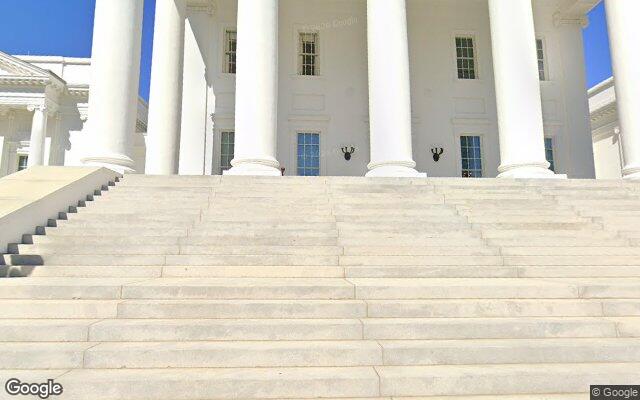 Virginia State Capitol, Richmond National Comparison
 Virginia licensed condo managers in 2008. New York still hasn't.
Virginia's DPOR has required community association manager licensing since July 1, 2008, and operates a state ombudsman that received 5,391 owner contacts in its most recently reported year. New York's equivalent bills on managing agent licensure, resale disclosure, and owner-dispute access have each stalled in committee or failed at the Assembly level.
Fannie Mae headquarters, Washington, D.C. · Carol M. Highsmith / LOC (public domain) Mandate Alert Fannie Mae's 15% reserve floor arrives in January. NYC condo boards need to act.
Fannie Mae Lender Letter LL-2026-03 raises the minimum reserve allocation to 15% of annual assessment income for any mortgage dated January 4, 2027, or later. Buildings that fall short without a qualifying reserve study get marked unavailable for conventional financing. New York has no reserve study mandate, and the bills that would have created one did not advance before Albany adjourned on June 18.
Long Island City, Queens · King of Hearts / CC BY-SA 3.0 Regulatory Gap Your contractor is ready. Your board has no deadline to approve the permit.
Starting January 26, 2026, co-op and condo boards must formally attest to unit renovation permit applications in DOB NOW before the Department of Buildings will process them. No statute sets a deadline for the board's response. The person typically executing that attestation is the managing agent, who needs no license in New York.
Empire State Plaza, Albany · Own work of Jer21999 (from en.wikipedia) (public domain) Disclosure Most condo sponsor LLCs are exempt from NY's transparency act.
The NY LLC Transparency Act took effect January 1, 2026. Governor Hochul's December 2025 veto of S.8432 kept domestic LLCs out of scope. The NY Department of State confirmed the same day: only non-US LLCs must file beneficial ownership information. Virtually every NYC condo sponsor LLC is domestic. Albany adjourned June 18, 2026 without passing a fix.
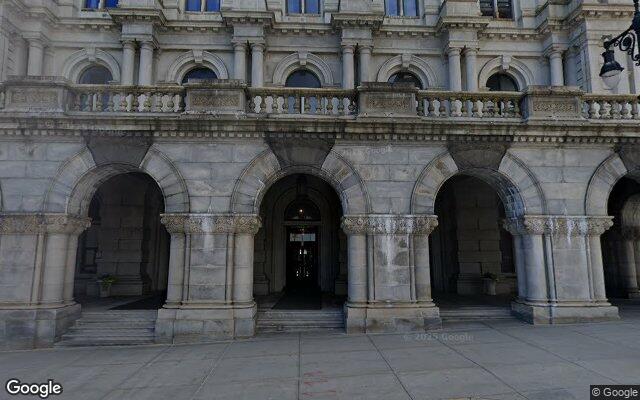 NY State Capitol, Albany Legislation
 When Albany adjourned in June, four co-op reform bills had no vote.
The 2025-2026 NY legislative session closed with four co-op reform bills still in committee. S.71, managing-agent licensure, failed to advance for the tenth consecutive year. S8912, S6346, and A8945 also did not receive a floor vote. In each case, the mechanism was committee referral without a scheduled hearing.
Brooklyn Heights townhouses · Rickbern / CC BY-SA 3.0 How To New York rewrote the rules for neighbor access during facade repairs.
A 1968 procedural statute governed every LL11 facade project that crossed a property line. S3799-C, signed by Governor Hochul on December 5, 2025, rewrites RPAPL Section 881 with a 60-day response clock, explicit authorization for permanent tiebacks and anchors, and actual damages replacing full indemnification. Attorney fees remain contested in court.
 Carnegie House, W 57th St Legislation
 Ground lease co-op rent cap failed to advance. Fourth year in a row.
Albany adjourned the 2026 legislative session without passing S2433A, the ground lease co-op rent cap. For the fourth year in a row, roughly 25,000 NYC shareholders in approximately 100 buildings have no statutory protection against land rents that courts can reset without limit. Carnegie House documented the cost: $4.3 million in annual ground rent reset to $24 million, upheld by courts.
Lower Manhattan · King of Hearts / CC BY-SA 3.0 Regulatory Gap The FDNY's steam-era staffing rule is making LL97 retrofits cost more.
NYC Fire Code Section FC 606.1.1 requires a licensed Refrigerating System Operating Engineer on-site whenever a refrigerating system above 50 HP runs. For condos and co-ops pursuing LL97 electrification, this makes centralized heat pump plants prohibitively expensive to staff. Buildings are pushed toward distributed VRF instead.
 Solar retrofit · U.S. DOE (public domain) Regulatory Gap
 Local law 97's C-PACE financing tool has a structural gap for co-ops.
Local Law 97 mandates carbon compliance for large NYC buildings, but the primary financing tool, C-PACE, requires written lender consent from co-ops' blanket mortgage holders. The first NYC co-op to close a C-PACE deal took nine months to get that consent. Condo unit owners largely cannot use C-PACE at all.
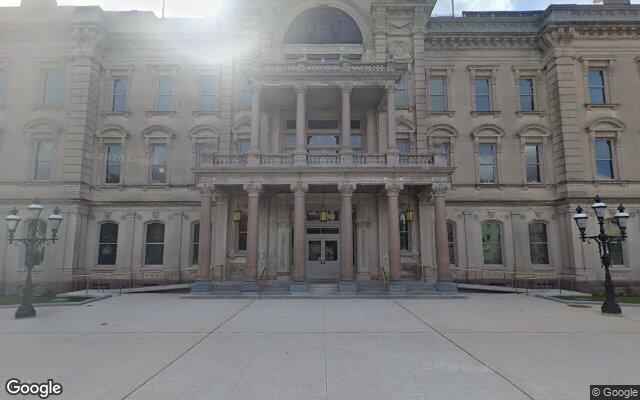 New Jersey State House, Trenton National Comparison
 New Jersey mandated reserve studies for condos. New York still hasn't.
New Jersey enacted a mandatory 30-year reserve study requirement for condos and co-ops in January 2024 and tightened it in August 2025. New York's companion bills A8945 and S7600 were referred to committee in 2025 and went no further. New York's 15,108 condo and co-op buildings carry that gap into 2026.
California State Capitol, Sacramento National Comparison California required balcony inspection disclosure at sale. New York hasn't.
California's SB 326 mandated engineer inspections of condo balconies beginning January 2025. SB 410, effective January 1, 2026, added a seller-disclosure requirement: the most recent report must be in the pre-contract package. New York has no equivalent at resale. S7541 passed the Senate 58-1; the Assembly companion did not advance.
New York State Capitol, Albany · Shaunfrombrooklyn / CC BY-SA 4.0 Regulatory Gap The AG published proposed condo conversion rules. The comment window closes July 12.
The NY AG's Real Estate Finance Bureau published proposed rules on May 13, 2026 updating 13 NYCRR Parts 18 and 23, which govern how landlords convert occupied NYC rental buildings to co-op or condo ownership. The rules implement HSTPA 2019 and a 2022 amendment that have sat uncodified for years. The 60-day public comment period ends July 12, 2026.
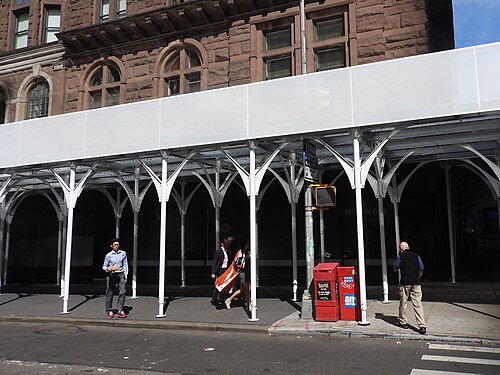 Sidewalk shed · J. Henderson / CC BY-SA 4.0 Mandate Alert
 Three 2025 laws rewrote FISP. The shed clock is now 90 days.
Local Laws 48, 49, and 51 of 2025 collectively change the FISP program. LL48 limits shed permits to 90-day renewals. LL51 adds $5,000-$20,000 fines for owners with active sheds and no repair plan. LL49 extends the inspection cycle from 5 years to 6-12 years, effective October 2026. Boards should read all three before assuming the cycle extension is relief.
Manhattan Municipal Building (NYC Dept. of Finance) · Kidfly182 / CC BY 4.0 Tax Alert The 467-a abatement expires June 30. The DOF crackdown came first.
NYC's partial tax abatement for co-op and condo owner-occupants under RPTL §467-a expires June 30, 2026. The Mamdani administration sent primary-residency enforcement letters in April, targeting $13 million in cuts. The program has been extended eight times since 1996. No ninth renewal has been signed into law.
Fannie Mae headquarters, Washington, D.C. · Carol M. Highsmith / LOC (public domain) Mandate Alert Every NYC condo loan goes to full review on August 3. Is your building ready?
Fannie Mae Lender Letter LL-2026-03 eliminates the limited review process for established condos on August 3, 2026. Every mortgage on a NYC condo in a project with more than 10 units now requires full underwriting review. If unfunded critical-component repairs exceed $10,000 per unit, the building loses conventional financing eligibility.
NY State Senate Chamber, Albany · NY Senate Photo / CC BY 2.0 Legislation NY's condo transparency bill: 58-1 Senate, Assembly sponsor withdrew it
NY Senate Bill S7541 passed the NY Senate 58-1 in June 2025. The bill would have required condo and co-op boards to disclose engineering reports and inspection records to buyers at contract signing. Florida enacted the equivalent reform first. The Assembly bill's sponsor withdrew before a floor vote. A8337 sits in the Housing Committee.
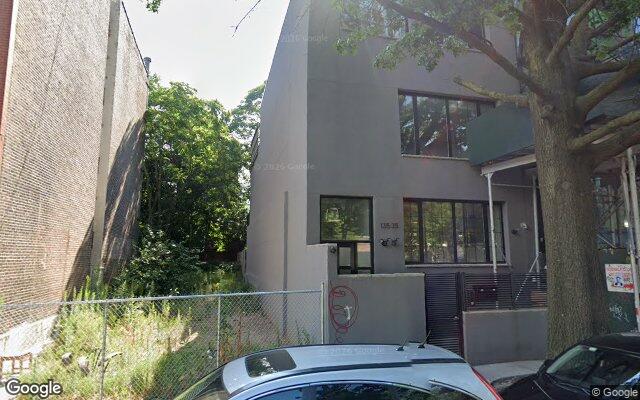 135 Carlton Ave, Fort Greene Regulatory Gap
 The AG secured $230,000 from a condo sponsor. The structural gap remains.
The AG's May 2026 settlement with 135 Carlton Ventures, LLC secured $200,000 in restitution after the Fort Greene condo sponsor misrepresented the building as new construction and concealed structural foundation defects. What the Martin Act can reach, and what it leaves behind for unit owners.
Empire State Plaza, Albany · Own work of Jer21999 (from en.wikipedia) (public domain) Mandate Alert NYC just made managing agents liable. They still need no license.
Local Law 58 of 2026 takes effect July 28, 2026. It establishes mandatory timelines for co-op boards reviewing purchase applications, defines 'cooperative corporation' to include the managing agent, and creates direct HPD enforcement with fines starting at $1,000. S.71, the managing-agent licensure bill, has not moved.
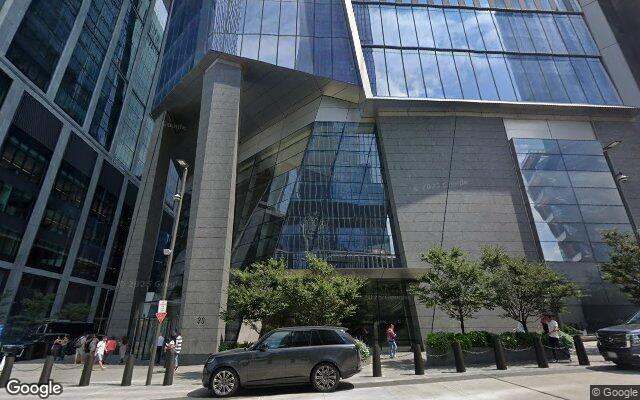 Hudson Yards, Manhattan Pillar
 Hudson Yards: What $5.6 Billion in Public Money Actually Built
The popular Hudson Yards story is approximately right and specifically wrong. The agency that produced the headline figure is not the IBO; it is SCEPA at The New School. The number is $5.6 billion, not $6 billion. Phase 2 is not paused; it broke ground in June 2025. The verified mechanics matter because the same public-bond-to-private-windfall structure is sitting in active proposals across NYC right now.
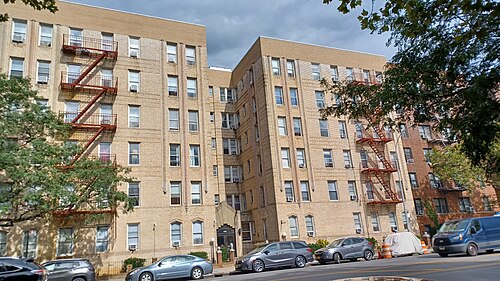 NYC walk-ups · GK tramrunner / CC BY-SA 4.0 Tax Alert
 The Pied-à-Terre Tax Just Made Your Co-op Board a State Tax Collector
New York's 2026-2027 budget added a pied-à-terre surcharge that takes effect July 1. Co-op and condo units are taxed starting at $1 million and several times higher than single-family homes. And the statute makes the co-op corporation collect it from shareholders, with the building's tax lien as the backstop.
Manhattan Municipal Building (NYC Dept. of Finance) · Kidfly182 / CC BY 4.0 Tax Alert The J-51 Abatement Just Came Back for Ten Years. Here's Who Qualifies.
New York renewed the J-51 property tax abatement through 2036 as part of the FY 2026 budget, raised the benefit cap to 100% of certified rehabilitation cost, and lifted the per-unit assessed value ceiling for co-op and condo eligibility. The headline is the duration. The story is the eligibility floor.
Florida State Capitol, Tallahassee National Comparison Florida Fixed Condo Transparency After Surfside. New York Hasn't.
After 98 people died at Surfside, Florida passed HB 913 — a statewide cloud database every condo association must register and file into. New York has nothing equivalent. The same gaps that triggered Florida's reform exist here, today, untouched.
New York State Capitol, Albany · Shaunfrombrooklyn / CC BY-SA 4.0 Regulatory Gap Why the NY AG Can't Help With Most Condo Governance Disputes
The Attorney General's Real Estate Finance Bureau is structurally incapable — not merely unwilling — of resolving most condo and co-op governance disputes. The Martin Act reaches sponsor fraud and offering-plan misstatements, not a board that ignores its own bylaws. A diagnosis of the statutory architecture, and what owners can do instead.
NY State Assembly Chamber, Albany · Matt H. Wade / CC BY-SA 3.0 Legislation S.71 Is the NY Managing-Agent Licensure Bill Nobody's Talking About
NY Senate Bill S.71 (Kavanagh) would require condo and co-op managing agents to register with the Department of State. The bill sits in committee. Industry insider David Kuperberg calls the current regime 'dinosaur age.'
 Lower Manhattan skyline Methodology
 What's Actually in a Forensic Building Audit (Sample Walkthrough)
Walk through the structure of our Level 2 Buyer Brief and Level 3 Forensic Audit using a sample building. Section by section, what arrives in the PDF, where the data comes from, and how to read it.
NY State Capitol, Albany Legislation New York's Condo-Reform Record: What Stalled, and What Passed.
Ten condo and co-op governance reforms. Six stalled in Albany committees — managing-agent licensure for nine straight sessions. Two became law. Two have no bill at all. Every entry linked to its primary source.
Empire State Plaza, Albany · Own work of Jer21999 (from en.wikipedia) (public domain) Disclosure The NY LLC Transparency Act Took Effect — Sponsor Disclosure Looks Different Now
Effective January 1, 2026, every NY LLC — including condo and co-op sponsor LLCs — must file beneficial-ownership information with the Department of State. Public access is limited; civil discovery has a target for the first time.
Manhattan Municipal Building (NYC Dept. of Finance) · Kidfly182 / CC BY 4.0 Methodology How We Built the Tier Carrying Burden Framework for 421-a Phase-Out
When a 421-a tax abatement expires, the building's tax bill reverts to full Class 2. Affordable-tier owners face a permanent carrying-cost cliff. Here's the formula, the threshold bands, the condo-tier-fragility lesson, and the live calculator.
New York State Capitol, Albany · Shaunfrombrooklyn / CC BY-SA 4.0 How To How to Write an AG REFB Complaint That Doesn't Get Ignored
The NY Attorney General's Real Estate Finance Bureau has a small enforcement staff and receives a steady stream of complaints each year. A well-structured complaint with primary-source citations is substantially more likely to get a written response. Six-part structure.
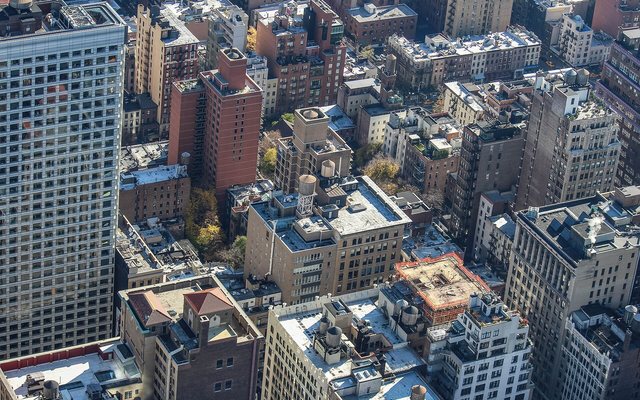 Manhattan rooftops · Lucas Franco / CC0 Methodology
 The 15,108-Building NYC Condo + Co-op Universe: What's In It and What's Missing
There is no canonical public list of every NYC condo and co-op. We built one from PLUTO. The total is 15,108 buildings — 10,882 condos and 4,226 co-ops. Methodology, what's public, what's paid, and the known gaps.
 Glass office tower Thesis
 Your Home Is Not an Investment. It's a Point of Extraction.
When you stop seeing your NYC condo or co-op as an investment and start seeing it as a node in an extraction network, every regulatory gap, every absent oversight body, every missing enforcement mechanism stops looking like a failure and starts looking like a feature.
 NYC residential tower Pillar
 The NYC Local Law Extraction Stack: Every Mandate, Every Dollar
A master index of every NYC local law imposing compliance costs on condo and co-op buildings — with estimated annual citywide extraction, primary beneficiaries, and an honest assessment of safety benefit. Start here.
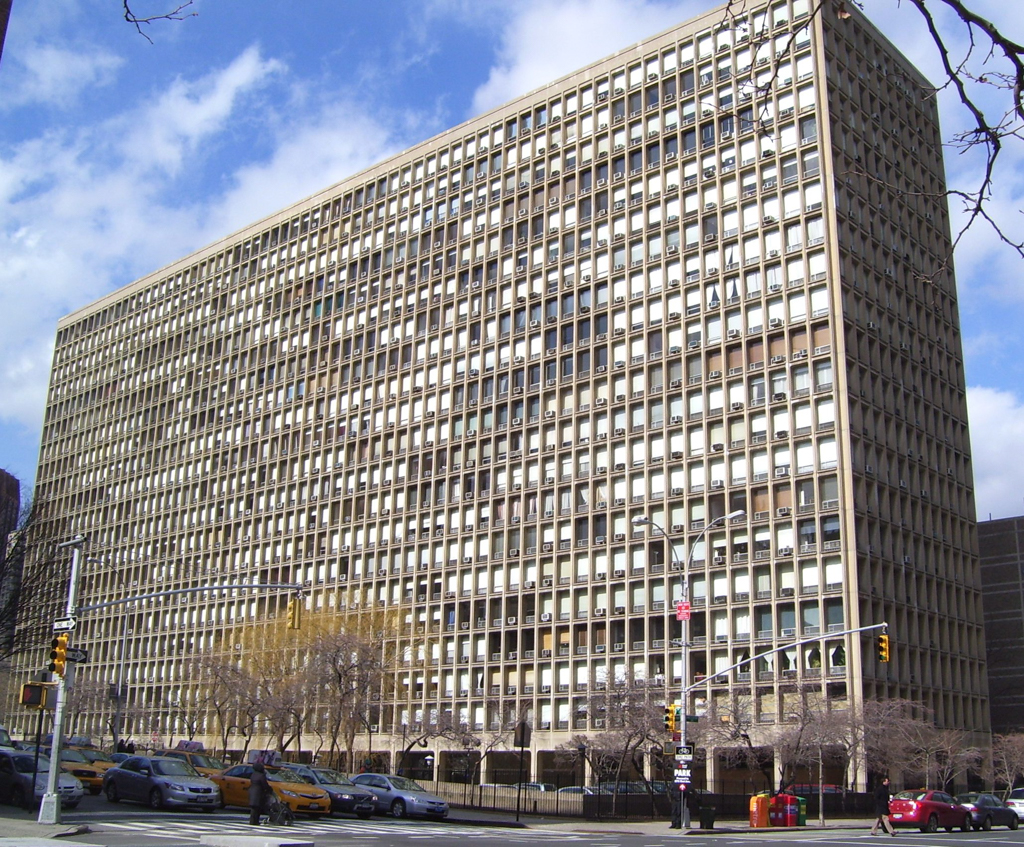 Kips Bay Towers Mandate Alert
 Local Law 97: The $20 Billion Carbon Penalty Hanging Over NYC Condos
LL97 caps carbon emissions from NYC buildings over 25,000 sf. Penalties of $268 per metric ton over the cap began in 2024 and tighten sharply in 2030. Retrofit costs can run $50-$200 per square foot.
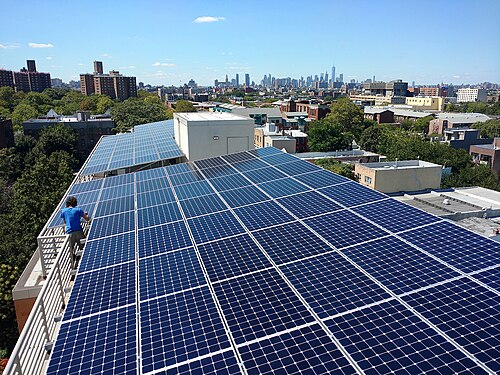 Rooftop solar · U.S. DOE (public domain) Explainer
 Local Laws 84, 87, 88: The NYC Energy Compliance Bundle
Benchmarking, 10-year audits, retro-commissioning, lighting upgrades, sub-metering. Fifteen years of the 2009 energy laws have produced lots of reports and modest energy reductions. We break down who gets paid.
 Sunnyside, Queens · Tdorante10 / CC BY-SA 4.0 Mandate Alert
 Local Law 126: The Next Local Law 11 (But for Parking Garages)
LL126/2021 requires 6-year structural inspections of every NYC parking structure. Triggered by the 2023 Ann Street collapse. Repair costs range from $200K to $5M+ per building — with every one of LL11's extraction dynamics baked in.
Park Slope Historic District, Brooklyn · Jim.henderson / CC BY-SA 4.0 Mandate Alert Local Law 152: The Gas Piping Inspection Every Four Years
Born from the 2014 East Harlem gas explosion, LL152 requires licensed master plumbers to inspect gas piping every four years. Strong safety case; tight plumber-expediter bottleneck on the compliance side.
Midtown Manhattan · CommunistSquared (cc0) Explainer Local Law 147: Cooling Towers, Legionella Testing, and the 2015 Outbreak
After the South Bronx Legionnaires' outbreak killed 12 in 2015, NYC built one of the tightest quarterly-testing regimes in the country. The safety case is strongest in the entire local-law stack; the vendor-lab-remediator integration is the cost problem.
Bay Ridge, Brooklyn · GK tramrunner RU / CC BY-SA 4.0 Deadline Alert Local Law 31: XRF Lead Testing and the Abatement Economy
Every pre-1960 NYC apartment had to be tested with an EPA-certified XRF instrument by August 2025. Buildings that missed the deadline face cascading HPD exposure. Per-unit abatement runs $2K-$15K.
Park Slope Historic District, Brooklyn · Jim.henderson / CC BY-SA 4.0 Explainer Local Law 55: Indoor Allergens, Annual Inspections, HPD Exposure
The Asthma-Free Housing Act requires annual inspection for mold, pests, and indoor allergens, with tenant notices and remediation. Cheap when done in-house; escalates quickly once HPD violations land.
Long Island City, Queens · King of Hearts / CC BY-SA 3.0 Explainer Local Law 196: The 40-Hour SST Card and the Construction Labor Toll
You won't see it on a maintenance bill, but every LL11, LL97, and LL126 project at your building is 3-7% more expensive because of Site Safety Training compliance. How the labor toll flows through to unit owners.
 Elevator · Platinum Elevators / CC BY 4.0 Mandate Alert
 NYC Elevator Laws: CAT1, CAT5, LL64 Door Locks, 2027 Deadline
Four firms control nearly all NYC elevator service. LL64 door-lock monitoring retrofits are due January 1, 2027. Annual CAT1 and five-year CAT5 tests, plus the most oligopolistic service market condos and co-ops face.
Sunnyside, Queens · Tdorante10 / CC BY-SA 4.0 Explainer Local Law 111: Annual Boiler Inspections and Combustion Tests
NYC low-pressure boilers require annual inspection and triennial combustion efficiency testing. Defensible safety regime; the cost problem is the inspector-as-repair-contractor pipeline and expediter toll on DOB NOW filings.
125th Street, Harlem · Rup11 / CC BY-SA 3.0 Mission Why We Built CondosCoopsNYC
A barber needs a state license. A cosmetologist needs a state license. The person managing your $200M residential building needs nothing. We bought a condo, got blindsided, and decided to build the registry the state refuses to maintain.
Lower Manhattan skyline Tax Alert Your 421-a Tax Abatement Is Expiring — Here's What It Will Cost You
Thousands of NYC condos built between 2005 and 2020 have 421-a tax abatements that are expiring between 2025 and 2035. When your abatement expires, your property tax bill can triple. Here is how to check if your building has one and what it will cost.
 Sidewalk shed, W 57th St · J. Henderson / CC BY-SA 4.0 Explainer
 What Is Local Law 11 and Why It Could Cost You $50,000
Every NYC building over six stories must pass a facade inspection every five years. If yours fails, the repair bill can reach $20,000 to $80,000 per unit — with no cap, no competitive bidding requirement, and no independent cost review.
No stories in this topic yet.
STAY INFORMED
The newsroom that reads the filings so you don't have to.
We are building the definitive record of NYC condo and co-op governance failure — one primary source at a time. New stories publish as new mandates land, new gaps open, and new data surfaces.